The white balloon floated toward the heavens, but no one on the ground was upset about losing it. Towing a battery-powered instrument called a radiosonde that gathers and transmits data on temperature, humidity, wind speed and more, the weather balloon was launched from Crawford Green by meteorology students and faculty and sponsored by the Florida Tech chapter of the American Meteorological Society.
The goal of the event was to teach students about the process of setting up and launching a weather balloon and to help them learn about why it matters that this data is collected, said Gabe Taylor, a senior meteorology student and president of the AMS chapter at Florida Tech. It matters, he added, because data collected from weather balloons is inputted into numerical weather prediction models which aid in forecasting the weather.
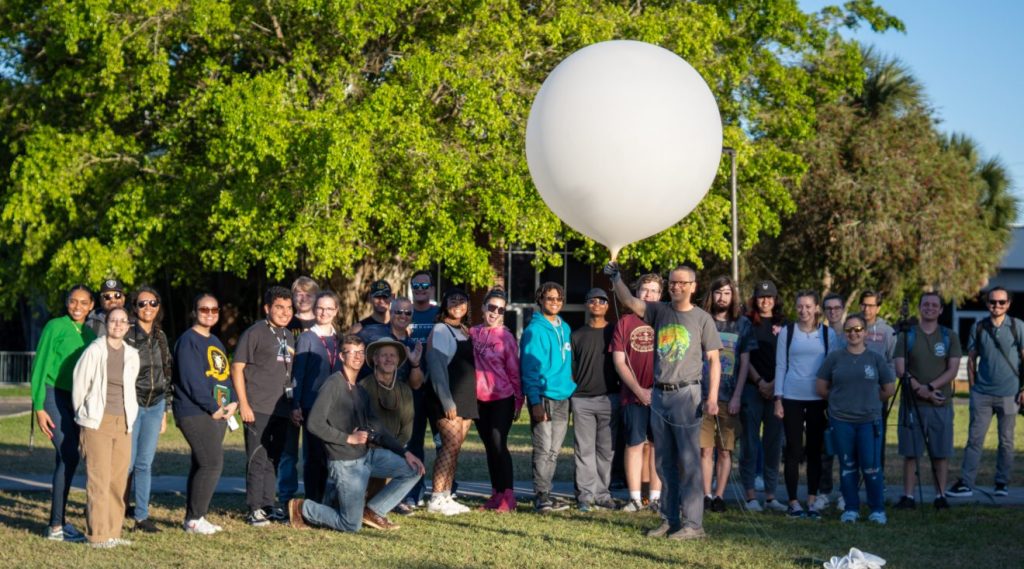
The balloon could travel to an altitude of up to 30 kilometers, or about 18 miles, before bursting. The last data transmission from Wednesday’s launch had the balloon at about 4 miles high and drifting over the Atlantic Ocean. If it did burst, the balloon is made of 100% biodegradable natural latex and is designed to “shatter” into small pieces, allowing it to biodegrade more quickly.
Once its ride ends, the radiosonde, having transmitted its data in real time, will drift back to Earth beneath a small parachute. They often land hundreds of miles from the starting point, so they are not always retrieved. But some radiosondes, such as those from the National Weather Service, come equipped with a return bag and address in case they are found.