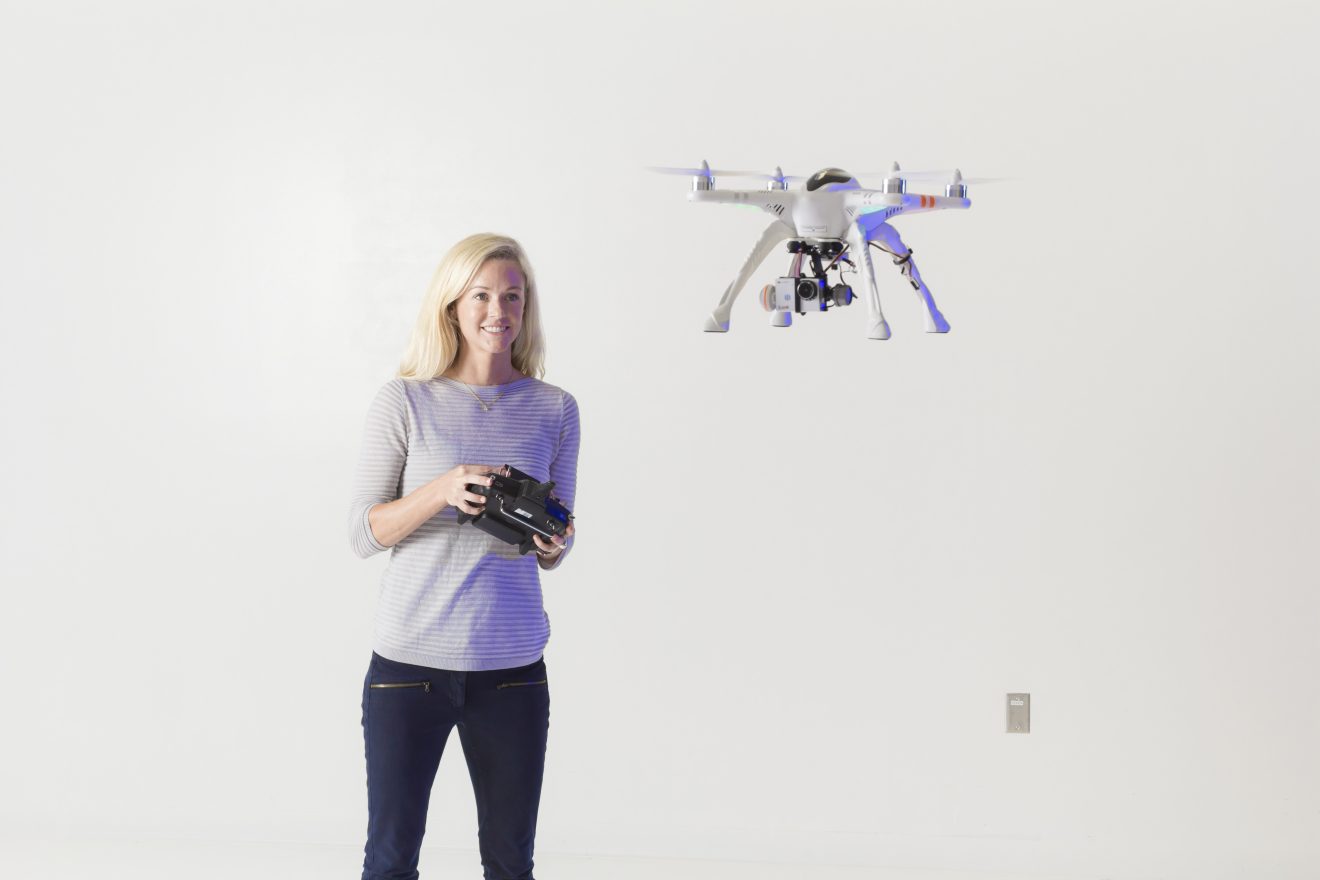
With the rapid rise of drone technology and its influence on industries from entertainment to engineering, Florida Tech’s Drone Club has become a hub of innovation and technological advancement.
Established to foster a passion for unmanned aerial systems, the Drone Club has evolved significantly over the years. Initially facing challenges such as campus drone restrictions and fluctuating member participation, the club has recently turned a corner. Eased restrictions now allow members to fly drones indoors in George M. Skurla Hall, leading to a notable surge in engagement and activity with the club reaching a peak of 50-60 members this semester.
At the helm of this revitalization is club president Liam Pettit, a junior majoring in aerospace engineering. Pettit stepped into the role with a clear vision and significant experience. Having obtained his FAA Part 107 license at 16, Pettit is well-equipped to lead the club. “The Drone Club wanted someone with some knowledge of soldering, assembling components, and flying. So, they asked me to step in,” Pettit said.
The Drone Club is divided into two groups: the design and engineering group and the professional group. Each group organizes its own events, though members can participate in both groups. “It’s about a 60/40 split between those who want to focus on design and engineering and those interested in professional videography and photography,” Pettit said.
Pettit is spearheading initiatives to enhance members’ technical skills. “On the design and engineering side, we’re aiming for three to four events per semester during which people can work on their drones. We will supply parts, teach them how to solder, assemble components, learn basic CAD, and then go test their drones,” he said.
The professional group, led by club vice president Jack DiMaggio, focuses on practical applications, including aerial photography and videography. “On the professional side, we’re organizing three to five events per semester, like learn-to-fly days, where we take people out and help them develop their skills, teaching them how to fly and handle the controls,” Pettit said. “We’ll hold study sessions or assist people with any struggles they have with obtaining their Part 107 license. We will also host an editing workshop to show people how to color grade and edit videos.”
The club’s commitment to helping members obtain their Part 107 licenses is a significant priority. “We’re trying to help students interested in obtaining their Part 107 license by assisting them with the process. Once they have the license, we want them to put it into practice by operating drones, practicing basic aerial maneuvers, and doing photography,” Pettit said.
Part 107 certification is crucial for legal commercial drone operation and opens up numerous professional opportunities for those who have obtained it.
One of the club’s most valuable resources is its simulators, which give members the opportunity to practice before taking control of real drones. “We are very fortunate to have campus-supplied simulators. So, whether they want to learn to fly the big, expensive drones or the little FPV drones, we can cater to both,” Pettit said. “We will have private, one-on-one sessions with members to explain the basic controls. After that, we will have them try out the simulator to gauge how it feels and set up a challenge for them. Then, they will transition to flying.”
This structured approach helps ensure that club members develop essential skills and confidence before moving on to real-world flight operations.
Financial support from Northrop Grumman, which has donated $1,000 annually to the club for the past three years, along with funding from the Student Activities Funding Committee (SAFC), has been instrumental in the club’s success. This financial backing helps sustain the club’s activities and programs, ensuring that members have access to the resources they need.
With a solid foundation and a clear vision, the Drone Club is poised for continued success. Pettit envisions future growth and expanded opportunities for members. “Hopefully, in the future, the club will continue to grow, and we can become a primary provider of photography and videography services for local businesses and other organizations,” Pettit said. “We aim to be a group that helps people learn to build, design, and engineer drones, in addition to learning to fly them. Additionally, we hope to have a race team that represents Florida Tech at other universities across Florida and the nation.”
As the club grows and evolves, it is set to be a dynamic force in drone technology, offering invaluable opportunities for Florida Tech students. Details on how to join the Drone Club and contact information can be found on their Engage page.