By Erin Peterson
Florida Tech offered one of the first major programs for applied behavior analysis. Today, its ABA offerings are among the best in the world. And they’ve propelled alumni success in a diverse range of careers.

In the late 1990s, when Jose Martinez-Diaz launched one of the state’s first-ever master’s programs in applied behavior analysis (ABA) at Florida Tech, the path forward seemed particularly promising. Credible credentialing options in the field were sorely needed, and it was a field with tools that could truly transform lives.
The tools of ABA had shown distinctive strengths to support individuals with autism, but there were myriad ways the field’s principles could be applied to sports, workplaces and even animal behavior.
Florida Tech’s master’s program in ABA officially launched in 1998, and in the quarter century since, applied behavior analysis has become an integral part of the institution. While it began as a master’s program within the School of Psychology, it has grown to become an entire school today. The School of Behavior Analysis offers bachelor’s-, master’s- and Ph.D.-degree programs in ABA, as well as multiple graduate certificate programs. There are both in-person and online options, and some 3,000 students are currently enrolled in one of the programs.
The opportunities are expansive: In-person students work directly with children or collaborate on research projects at The Scott Center for Autism Treatment. And Florida Tech’s reputation in the field among researchers and practitioners is sterling, says David Wilder, head of the School of Behavior Analysis. “We’re incredibly active in the field, speaking at conferences and appearing in journals,” he says. “We have name recognition, and people know that we’re among the best in this discipline.”
The future for the school continues to look bright, in part because of ABA’s valuable role in any number of the world’s challenges, from politics to climate change. “Any change that involves human behavior can benefit from a behavior analytic perspective,” says Bryon Neff, associate professor in the School of Behavior Analysis. “When we change human behavior, we can make an impact on important issues.”
To learn more about the importance and the impact of the field, we talked to alumni in diverse roles to understand how they’ve used ABA principles to inform their work.
“Any change that involves human behavior can benefit
Bryon Neff, Associate Professor, School of Behavior Analysis
from a behavior analytic perspective. When we change human
behavior, we can make an impact on important issues.”
Use ABA to…
Improve Safety

It was October 2021, and Reggie Seecharan ’20 M.S., ’20 MBA, was scaling the corporate ladder at Amazon with lightning speed. After earning plaudits for leading safe and productive teams, his boss tapped him for a particularly difficult assignment: improving the safety record of an Oregon warehouse that ranked dead last among more than 100 sites across the country.
As Seecharan began mapping out a plan, he knew that integrating ABA principles could make a difference.
“ABA is so focused on feedback,” he says. “We’re drilled to make sure that we’re delivering feedback in a way that’s timely, specific and impactful. I made sure I did these things early on.”
Not long after he arrived on site, Seecharan took action. He worked with the team that was already in place to define safe behaviors and leverage a recognition program to reward these actions. He created a group chat to escalate concerns quickly and identify gaps. And he drove accountability with mechanisms that ensured that problems that were identified were fixed promptly. Within a matter of months, safety issues plummeted.
“We saw a 31 percent reduction in recordable incidents and a 100 percent reduction in significant, serious events,” he says. “And a lot of that comes back to behavior analysis.”
Use ABA to…
Crush a Baseball
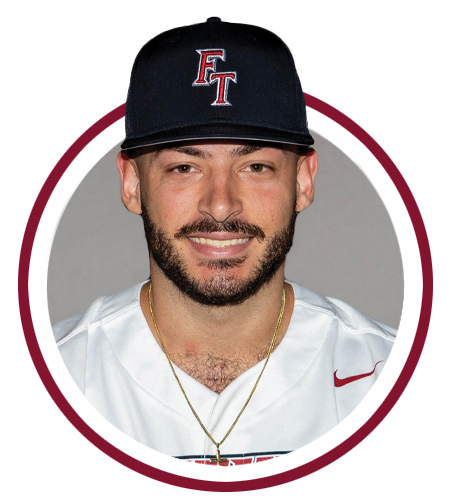
It takes less than a half second for a 90-mile-an-hour fastball to go from a pitcher’s hand to home plate.
That means that hitters have just milliseconds to identify what pitch is being thrown, where it might cross the plate and whether or not to swing at it.
For his master’s degree thesis, Josh Ford ’21 used an ABA tool known as “stimulus prompts” to analyze how uniquely colored seams on a baseball might help hitters identify the spin and trajectory of a pitched ball more quickly — and ultimately give them an edge in the batter’s box.
“Pitch recognition is just one aspect of hitting,” Ford says.
“But this is a topic that has a lot of upside potential for further research.”
Use ABA to…
Run a Successful Business
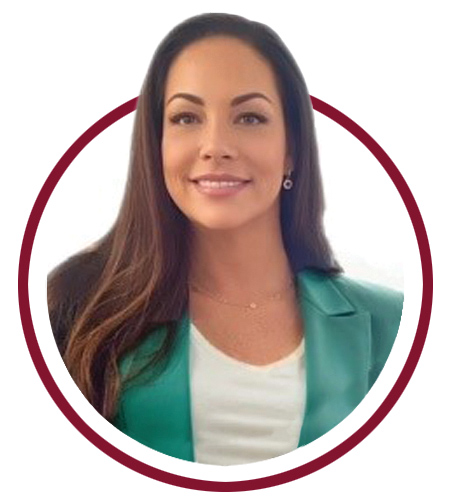
Karin Torsiello ’98, ’00 M.S., says she was “happy as a clam” working for the Behavioral Analysis Service Program in child welfare early in her career. She’d created a small side business, Behavior Basics, for private work that she did outside of the state contract that funded her work, though she had always intended to keep it as a sideline.
But when state funding got cut in 2008 and she and her colleagues had to wrap up operations in a matter of weeks, she found herself at a crossroads. She could find another job — or she could take her side business to the next level.
Within a week, she’d developed a game plan to go all-in on Behavior Basics. She and a few colleagues reached out to the agencies they’d had relationships with through their previous work, pitching a plan to run all of the same services through Behavior Basics.
Soon, she says, “we had contracts and budgets negotiated.” At a lightning-quick pace, she learned how to stay in compliance with state and federal guidelines, how to hire and how to grow.
Today, Torsiello leads a team of more than 70 employees at Behavior Basics, and the company specializes in working with individuals with conditions including autism spectrum disorders, bipolar disorder and attention deficit hyperactivity disorder. She’s particularly proud of the work the company has done to reduce the recidivism rate among perpetrators of child abuse.
As her company has grown, so have her ambitions: “Originally, ‘success’ was just paying the bills and paying myself a salary,” she says. “Then it was growing the team and serving more people. Now, we’re doing research, presenting our work, strengthening our team and training students. I love being able to be involved with so many different things.”
Use ABA to…
Improve Autism Care in Other Countries

Amanda Bueno Dos Santos ’19 M.A. had always wanted to work with people who have autism. But the Brazil native admits she began to sour on the idea when she started her undergraduate education in her home state of Paraná. She realized that she was being taught outdated, if not outright harmful, ideas about autism care. ABA techniques, if they were considered at all, were taught inaccurately.
Her experience led her to work methodically with others to create and support legislation in her home state that required practitioners in the field to use evidence-based practices with their patients. When she enrolled in Florida Tech’s ABA master’s program, she realized she could take her efforts even further.
With the support of leaders at Florida Tech and in the Paraná government, Bueno dos Santos helped push forward a multiyear partnership to provide high-quality online training materials for hundreds of professionals in Paraná who provide care for individuals with autism and other developmental disabilities. She wrote guidelines that are currently available on the Paraná Health Department website.
When the work finally all came together, Bueno dos Santos almost couldn’t believe it was real.
“I remember the moment that I first went to the website and clicked on the video with text that I wrote,” she says, an emotion borne of relief and gratitude. “I realized: this is really happening. Even now, every time I go to the website, I cry.”
Bueno dos Santos continues to advocate for laws that ensure the ethical treatment of people with autism. She helped draft a 75-page code of laws that clearly outlines these rules, including prohibiting the sale of unproven remedies.
“No matter what Congresspeople or the president want to do, this code will protect people,” she says.
Now she is also part of ANPAC, a new Brazilian Association focused on creating ABA guidelines for practitioners and building savvy consumers. Her next goal? Establishing licensure law for behavior analysts and behavior technicians.
“I had a chance to study at Florida Tech, and now I can give back to my country for the opportunities I had,” she says.
Use ABA to…
Give Esports Players an Edge in Competition
Esports—multiplayer video games played competitively for spectators—is a $1.38-billion-and-growing industry. Yet despite its massive economic impact, research to support its players and coaches “barely exists,” says Florida Tech assistant professor Kaitlynn Gokey ’12 M.S., ’20 Ph.D.

That’s starting to change, thanks to research being done by Gokey and her doctoral students, James Riswick-Estelle, Candace Fay and Alyson Intihar. Among the topics of their research are effective communication skills in the intense, hours-long games in which players have little visual interaction with one another. “Players have to talk in a way that is clear, concise and on-topic,” she says.
To support this work, Gokey and her doctoral students help players set goals, collect data on communication behaviors, and provide training and feedback to help them understand key areas for improvement. The goal, says Gokey, is to use the tools of ABA to give players and coaches skills to achieve at the highest levels of competition. “When teams communicate better, they get along better, perform better and win more,” says Gokey.
“When teams communicate better, they get along better, perform better and win more.”
Kaitlynn Gokey, Assistant Professor
A Hub for Progress
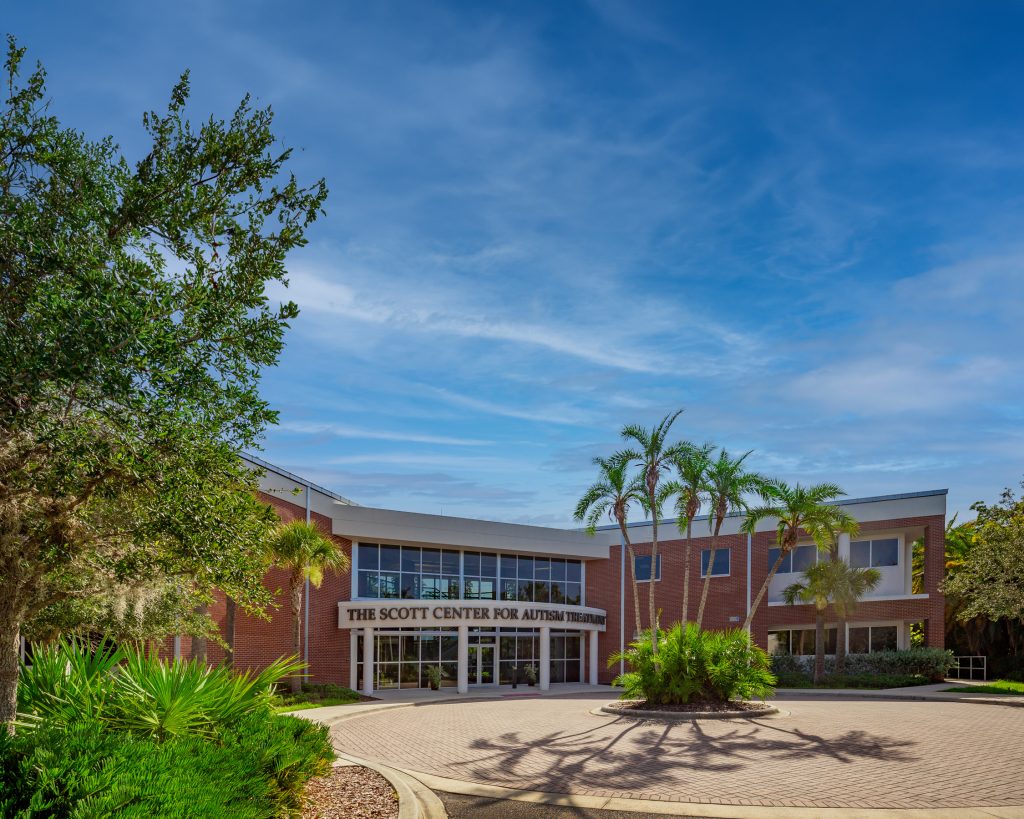
For individuals with autism, The Scott Center for Autism Treatment offers some of the most robust and cutting-edge care in the country, with a significant focus on the tools of applied behavior analysis.
The 22,000-square-foot building, which opened in 2009 with the support of Ed and Cheryl Scott and former U.S. Senator Dave Weldon, contains individualized treatment rooms, specialized clinical areas, classrooms and research space.
“It’s a state-of-the-art facility,” says Scott Center director Kim Sloman. “All of our clinical spaces have adjoining observation rooms that allow parents, therapists, students and others to observe what we’re doing.”
Plus, with collaborations among researchers from the department of biomedical engineering and science, the College of Psychology and Liberal Arts, and the School of Behavior Analysis, researchers are bringing new expertise and insight to drive progress.
While The Scott Center itself serves about 200 families per year, with many children receiving 25 to 30 hours of care each week as part of its early intervention programming, Sloman says the center’s most powerful work goes beyond direct treatment. “Our most impactful work is what we do to train the next generation of experts who will go out into the community and beyond to do treatment and intervention for more individuals,” she says.

This piece was featured in the fall 2024 edition of Florida Tech Magazine.