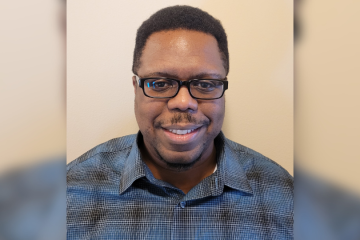
Originally from El Salvador, Nury Stevens arrived in the United States more than 35 years ago on a Fulbright Scholarship. At the time, she didn’t speak English. So before beginning her studies, she was required to complete a six month language program and pass the Michigan English Test.
“In those six months, I learned to read, write, speak and listen well enough to pass the test and start my bachelor’s degree in the U.S.,” Stevens recalls.
That determination—and her love of learning—would define Stevens’ life and career.
“I’ve always loved education and the humanities,” she says. “Since I was a child, I’ve loved to study and read.”
Now an adjunct Spanish instructor in Florida Tech’s College of Psychology and Liberal Arts, Stevens brings that same drive to her classroom every day.
“I love the students here,” she says. “They have dreams and goals, and they’re competitive in the best way—always striving to move ahead. Many of my students want to go to law school, become international pilots or work in marine biology. They have ambitions that go beyond the classroom.”
Her classroom is a lively, fast-paced space, where students think, move and speak in Spanish. Stevens teaches elementary and intermediate Spanish—courses that introduce both language and culture—using PowerPoint, timers and oral assessments to keep students engaged.
“I have to move quickly in class because I’ve noticed students’ attention spans are short—if I take too long, I lose them. So, I keep things active,” she says.
Even in her limited class time, Stevens incorporates cultural lessons through Vistas, a textbook featuring panorama and fotonovela segments that explore Latin American countries, cultural traditions and contemporary Spanish storytelling.
Stevens keeps her classes fun and energetic while emphasizing discipline and self-confidence.
“I want my students to have the confidence to speak Spanish because the biggest barrier is a lack of confidence,” she says. “Learning a language is a process. One needs consistency and patience. You’re not going to earn a degree by just watching soccer or hanging out with friends—you have to sit down and do the work. I would love to instill in my students confidence in their Spanish skills.”
For Stevens, the rewards of teaching are deeply personal.
“The most rewarding part of working with students is when they tell me, ‘Thank you. I’ve learned a lot in your class,’” she says. “For any professor, that’s the most meaningful thing a student can say. Education is meant to change people’s lives.”
She also sees language learning as especially vital at a STEM-focused university like Florida Tech.
“Learning another language develops your brain in new ways,” she explains. “It builds cultural sensitivity, which is essential. NASA, for example, doesn’t have only American employees; there are people from Pakistan, India, Vietnam and many other countries. You have to be able to collaborate with them. Knowing another language looks great on a résumé, but beyond that, it helps you understand other perspectives.”
Her advice to new language learners is simple: “Don’t be a perfectionist. Don’t be so hard on yourself—have fun and appreciate the opportunity to learn a new Language.”
Outside the classroom, Stevens enjoys painting and exploring the arts. Her favorite Salvadoran dish is pupusa—a nod to the country and culture that first inspired her love of learning.
“Where I come from, studying is a privilege, and I can’t take it for granted,” she says. “A book, a library, a professor—all of those are gifts. When something you love is hard to achieve, it becomes a treasure. A wealthy person might inherit a house; I feel like I inherited a love for knowledge. It’s so precious to me, and I’m deeply grateful for it.”
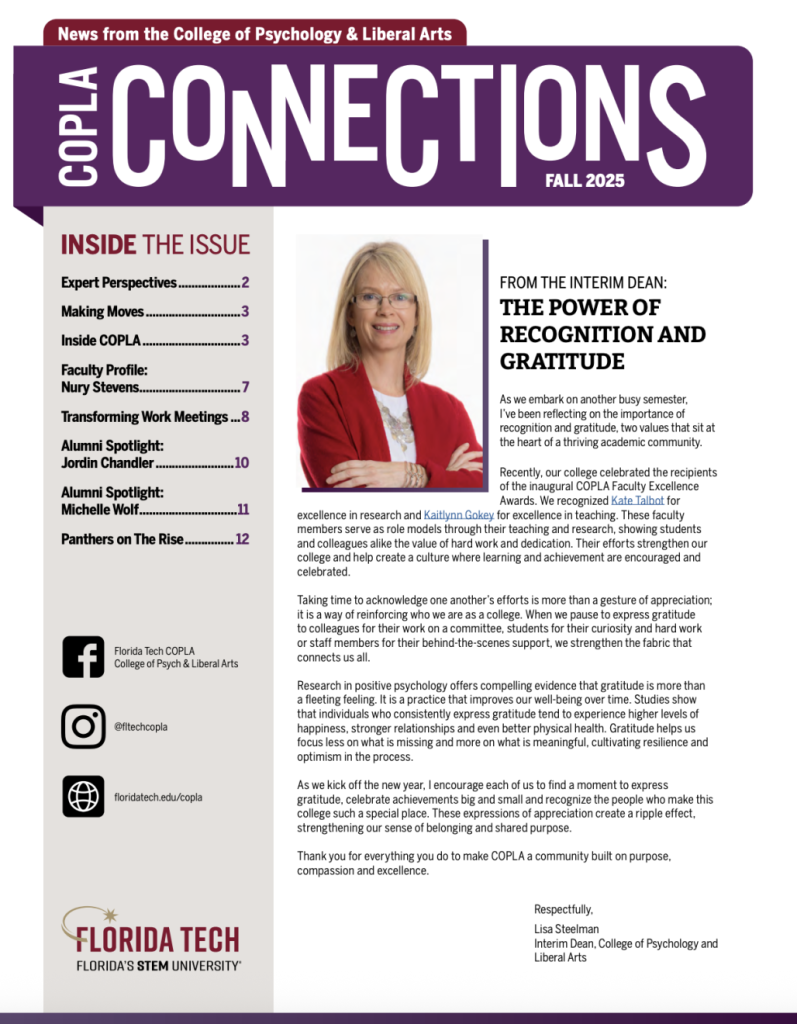
This piece also appeared in the fall 2025 issue of COPLA Connections.