By Meghana Krishna
Every breakthrough in science comes with a story of curiosity, persistence and the willingness to ask hard questions. Many of these stories belong to women whose voices and perspectives are reshaping the research landscape. At Florida Tech, women researchers are not only pushing the boundaries of knowledge in their respective fields, but also mentoring students, balancing family and career, and paving the way for future generations of scientists.
This feature highlights the work and experiences of four remarkable Florida Tech faculty members: assistant professor Kelli Hunsucker ’12 Ph.D., who studies the hidden costs of marine biofouling; professor Meredith Carroll ’03 M.S., who explores the interface between humans and machines through human factors research; assistant professor Sneha Sudhakaran, who uncovers digital evidence in the growing cyberforensics field; and associate professor Darby Proctor, who investigates the cognitive worlds of nonhuman primates. Despite working in different fields, they are united by a love discovery, the resilience to face challenges and a dedication to mentoring future scientists.
Each of these women highlights the human dimensions motivating her work, showing that the path to research can be just as important as the research itself. From the childhood fascinations that set them on their paths and the moments of joy in teaching and mentoring to the balance of personal and professional responsibilities and the surprising discoveries that keep their work invigorating, their stories paint a picture of the long-term influences and visions for the future that make their research so compelling.
Kelli Hunsucker: Studying the Ocean’s Hidden Challenges
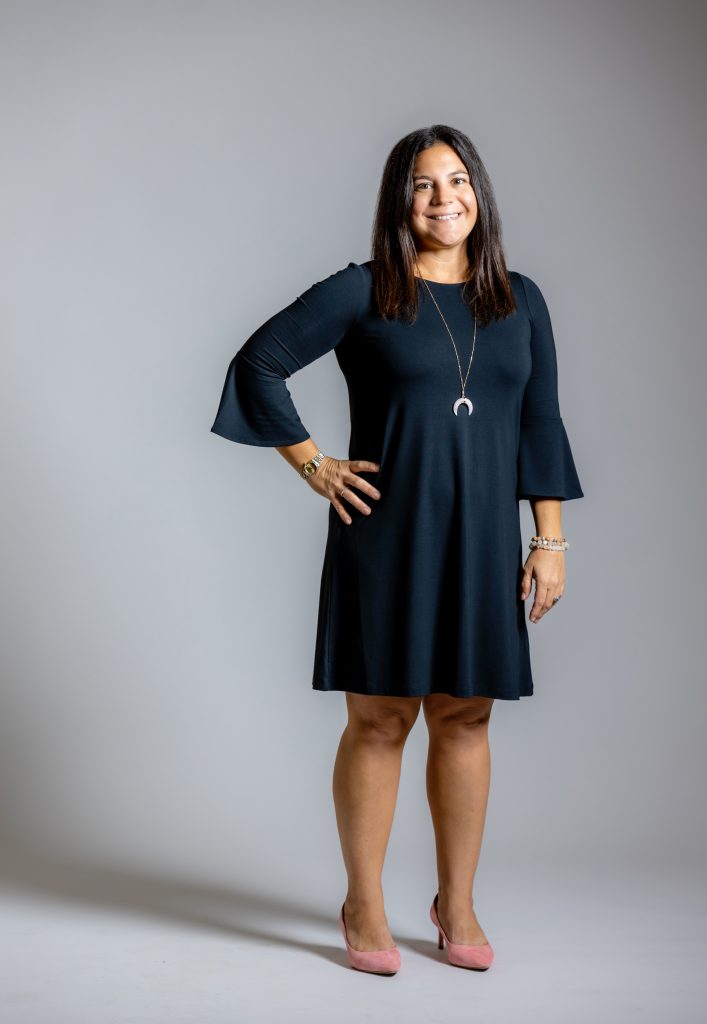
assistant professor of oceanography
Kelli Hunsucker always knew she belonged near the water.
“I have always been fascinated by the ocean,” she recalls. “Even from a young age, I knew I wanted to be an oceanographer, so I could study everything about it.”
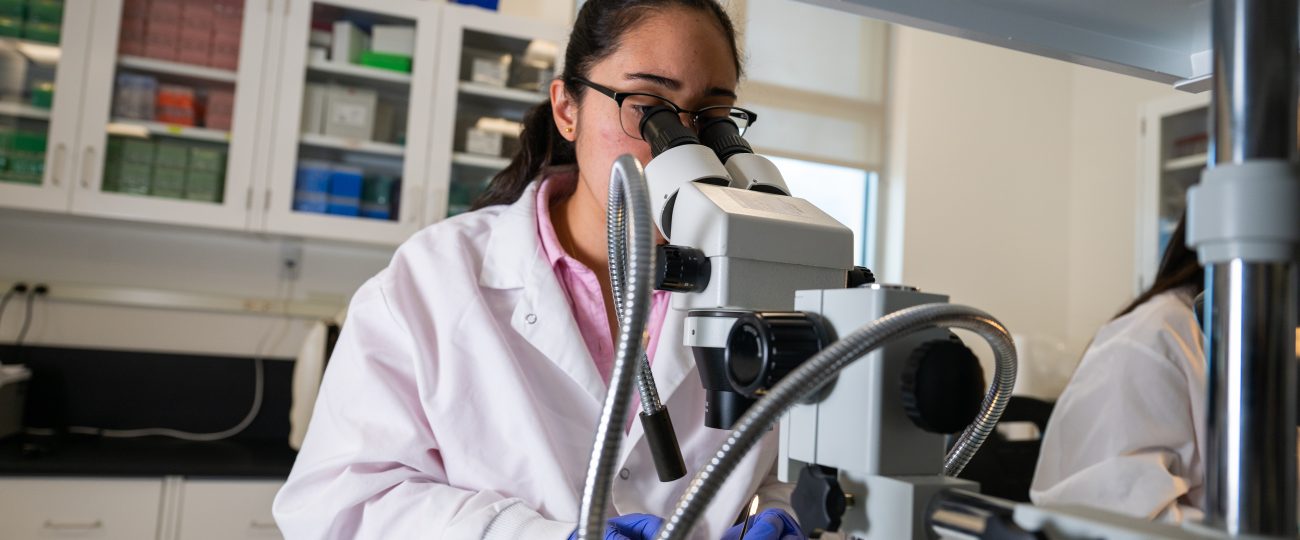
That fascination carried her from childhood days at the beach to becoming an assistant professor of oceanography at Florida Tech, where she earned her master’s in chemical oceanography and her Ph.D. in biological oceanography and now leads research at the Center of Corrosion and Biofouling Control.
Her specialty, marine biofouling, deals with the stubborn plants and animals (like barnacles, oysters, and seaweeds) that attach themselves to ships and other man-made structures. While biofouling might sound like a small inconvenience. Hunsucker explains that the stakes are much higher. The extra drag from biofouling slows ships down, increases fuel consumption and drives up both emissions and costs. Her team studies how to prevent this growth, turning their findings into solutions that can save industries millions of dollars while protecting the environment.
Teaching is another passion she weaves into her work.
“I enjoy telling the stories of the ocean and how [they] all relate to one another,” she says.
For her, the classroom is not confined to four walls. Smaller class sizes at Florida Tech allow her to take students into the field, whether that means boarding a research vessel at sunrise or collecting samples along the Indian River Lagoon. She believes these hands-on experiences bring ocean science alive in a way no textbook could.
Florida Tech also offers the kind of resources that make her research possible: a new marine science station, boats for field trips and research platforms that bring the curriculum directly into the ocean.
“The facilities and the connections we have made over the years really help make this possible,” she explains.
Hunsucker feels she is right where is meant to be in her career.
“I am very happy with where my career and research are at the moment,” she says. “We are doing some really cool things—studying how ultraviolet light works in the marine environment, expanding upon our genetic capabilities for marine biofilms and working on some deep-sea projects.”
The ocean still holds the same sense of wonder for Hunsucker as it did when she first fell in love with it as a child. Her favorite discoveries aren’t always captured in lab reports. Sometimes, they come in fleeting, magical moments during fieldwork, like spotting a baby octopus near her samples or watching the sunrise as the research vessel heads out to sea.
“No day in the field is boring!” she says.
Meredith Carroll: Connecting Humans and Machines

When Meredith Carroll describes her work, she often jokes that she is “half engineer and half psychologist.”
With a background in aerospace engineering, a master’s degree in aviation science from Florida Tech, and a doctorate in experimental psychology and human factors, she sits at the interaction of technology and human behavior. Human factors, she explains, is the study of how humans interact with machines and how systems can be designed to be safe and intuitive.
“It doesn’t matter how effective the system is at achieving its goals if the human operator can’t effectively utilize it,” Carroll says. “A human is a key part of the system.”
Carroll’s love of airplanes started early, sparked by an uncle who owned a small plane. By the time she entered college, aerospace engineering was the obvious path. But in graduate school, she stumbled across human factors research and was immediately hooked.
“The only thing cooler than studying airplanes was putting a human in an airplane and studying how to make the human-airplane system work effectively,” she says.
Today, Carroll leads Florida Tech’s Advancing Technology-Interaction and Learning in Aviation Systems (ATLAS) Lab, where she supervises about a dozen students on projects funded by agencies such as NASA.
Her lab has uncovered fascinating insights into human trust in artificial intelligence (AI) systems. In one story, she and her students found that when an autonomous drone makes a mistake, a human operator not only loses trust in that drone but also in similar types of autonomous agents. Even more surprising, the best way to rebuild trust wasn’t for the faulty agent to explain itself, but for the explanation to come from a different team member or even another type of AI. These findings, she notes, are critical, as industries expect graduates to juggle multiple AI tools in their daily work.
Balancing a demanding research career with family life is also central to Carroll’s story. With four sons between ages 10 and 17, she is candid about the trade-offs of pursuing both career and motherhood.
“You don’t have to make a choice between being a mom and having a career. It’s not an either/or; you can do both,” she says.
But she also cautions against comparisons: “Comparisons is the thief of joy. Make your life work for you, and that is all that matters.”
Florida Tech offered Carroll the flexibility to be both a professor and a parent, she says. With her lab’s momentum, new funding opportunities and a growing team, she is committed to continuing the ATLAS Lab’s trajectory. Her ultimate goal: to ensure that human ingenuity and machine intelligence are not at odds but in harmony.
Sneha Sudhakaran: Investigating the Digital Crime Scene
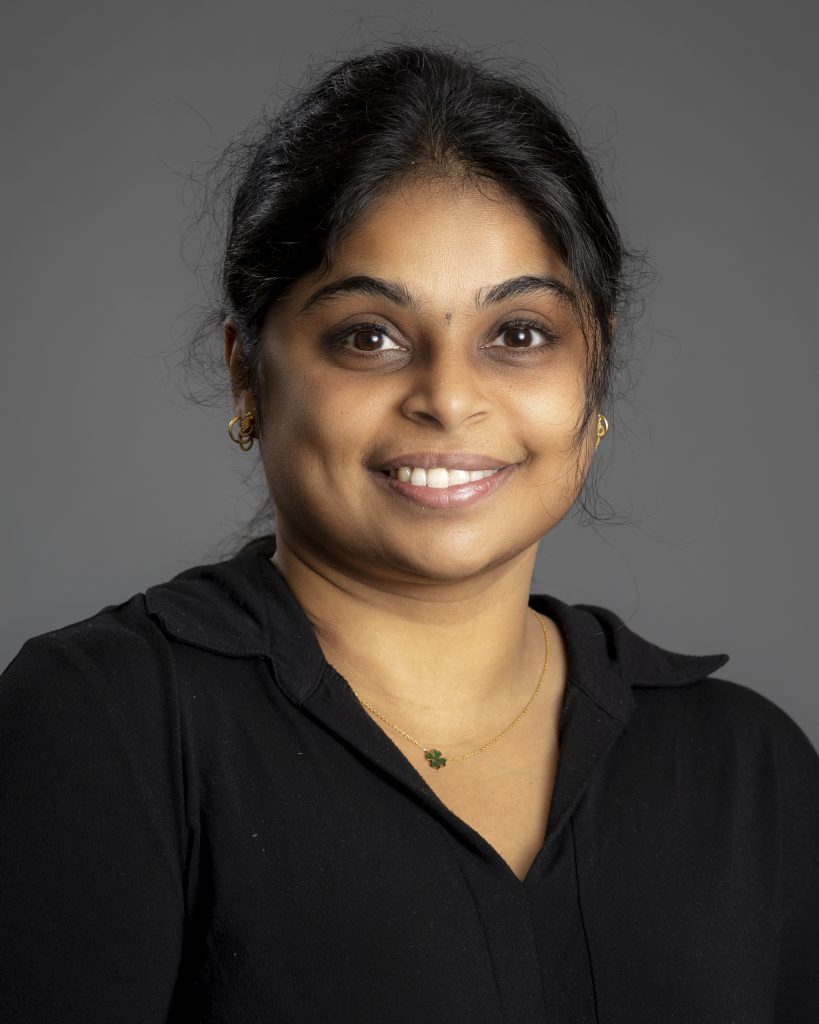
The thrill of investigation has always been in Sneha Sudhakaran’s DNA. She loved detective movies and crime stories as a child, imagining the many possible ways someone could be implicated in a mystery.
That curiosity eventually grew into a career in cyberforensics, a specialized branch of cybersecurity that works in the aftermath of cybercrimes.
“Our work involves collecting digital evidence from computers, mobile devices, and IoT [Internet of Things] systems, and then analyzing this data to reconstruct the sequence of events leading up to the incident,” Sudhakaran says.
She likens her role to that of a medical forensic specialist but in the digital world. Instead of examining physical traces of evidence, she pieces together clues from code, devices and networks. The stakes are high: Her work helps both law enforcement and individuals untangle crimes that often cross borders and industries.
Sudhakaran’s research contributions include creating two innovative tools for memory forensics on Android devices: DroidScraper and AmpleDroid. These milestones, published at respected technology conferences including Regulation of AI, Internet & Data (RAID) and the Institute of Electrical and Electronics Engineers (IEEE) Workshop on Information Forensics and Security (WIFS), marked her early achievements in carving out new approaches to digital investigation.
Today, her focus extends to cyberforensic challenges of IoT and mobile devices, areas where the pace of technological change demands constant adaptation.
At Florida Tech, Sudhakaran found the encouragement and resources to bring this niche field into the curriculum.
“When I started working at Florida Tech, cyberforensics was not offered,” she recalls.
With the support of colleagues and a motivated team, she began introducing students to the subject, blending theory with hands-on research opportunities. One of the best parts of teaching, Sudhakaran says, is learning from students’ unique approaches to logic and problem-solving.
“Each student has a unique way of applying logical reasoning,” she says, and those fresh perspectives often spark new ideas in her own research.
Sudhakaran thrives in a challenge, and she appreciates the lessons embedded in setbacks.
“I value the new ideas that emerge from research failures, as those very setbacks have often been the driving force behind the successes I have achieved,” she says.
That resilience—seeing missteps as springboards rather than dead ends—is central to her philosophy as both a scientist and a mentor.
Sudhakaran hopes to deepen her work in mobile and IoT forensics, while bringing more students into the field.
“I would like to see more students get involved in this research,” she says, adding her gratitude for the mentors and colleagues who have supported her journey.
Darby Proctor: Unlocking the Minds of Primates

Curiosity is the engine that drives Darby Proctor’s research. As a psychology researcher, she studies how nonhuman animals—particularly primates, such as spider monkeys—understand and make decisions about their world. Her goal isn’t always immediate application, but rather to ask fundamental questions about cognition and behavior.
“Many groundbreaking discoveries were made through curiosity rather than having an application in mind,” Proctor explains.
What she learns primates today may one day shape conservation practices or even offer insight into the origins of human decision-making, she says.
Her passion for animal behavior began in childhood with a zoo field trip. Watching a chimpanzee use a stick to retrieve popcorn that had fallen out of reach sparked a lifelong fascination. That moment eventually guided her to graduate work in cognitive sciences at Georgia State University, where she studied under some of the leading names in primate research. What captivated her most were not just questions of what animals do, but what they can do—the underlying cognitive abilities that shape their actions.
At Florida Tech, Proctor has helped build a thriving animal behavior program, partnering with Brevard Zoo to create unique research opportunities. Students regularly study spider monkeys at the zoo, observing them in social groups or inviting them to participate in problem-solving tasks.
“All of the research is voluntary,” Proctor emphasizes. “If a monkey doesn’t want to participate, they don’t have to. But usually, they’re excited because to them, the research tasks are fun puzzles where they can earn treats.”
Her work has revealed striking insights into primate cognition. In one study, chimpanzees played an “ultimatum game,” offering their partners a fair share of rewards if cooperation was necessary to succeed. In another, she developed the Primate Gambling Task to examine how monkeys and apes approach risk and reward. The results showed that capuchin monkeys behaved like careful economists, maximizing rewards regardless of risk, while chimpanzees and humans displayed more varied, emotionally influenced strategies.
Perhaps her most surprising finding, however, came not in the lab but in the zoo habitat. When Brevard Zoo welcomed infant spider monkeys rescued from the illegal pet trade, the research team worried about integrating them into the established group. To Proctor’s astonishment, the alpha male, Shooter, adopted the babies, caring for them as if they were his own. Even more remarkably, the group welcomed the strangers with hugs—behavior almost never seen among wild spider monkeys.
Spider monkeys hugging strangers, even infants, is just so strange,” she reflects. “It suggests a level of prosociality, and maybe even emotional maturity, that we don’t yet fully understand.”
Proctor is eager to continue unraveling the cognitive complexity of spider monkeys, whose fission-fusion social structure resembles that of humans and other highly social species.
With the launch of a new B.S. degree in animal behavior and cognition at Florida Tech, she sees a bright future for both the research program and the students who will carry this work forward.
For her, every study is part of larger puzzle: not just about monkeys but about the very roots of what it means to be human.
These researchers’ stories highlight the creativity and resilience that women bring to science and education. As more women continue to shape research across disciplines, their perspectives broaden the scope of inquiry and enrich the scientific community. They remind us that progress in science is not just about discovery but about accessibility, mentorship and the courage to follow curiosity—wherever it leads.

This piece was featured in the fall/winter 2025 edition of Reinvented Magazine.