By Erin Peterson
Academic researchers often study niche areas in their fields, methodically and painstakingly building new knowledge in areas ranging from gastrointestinal diseases to aviation sustainability.
Not surprisingly, the habits of mind that make them good at their work don’t disappear when they leave campus. The frameworks and knowledge they use in their work are often remarkably useful in everyday life.
To that end, we asked six Florida Tech faculty members to share how the thinking behind their research has shaped the way they approach everything from picking up a new hobby to shrinking their environmental footprint to designing a backyard.
Their advice is practical, specific and rooted in years of professional problem-solving. Best of all, none of it requires a Ph.D. to put into practice.
I’m a research scientist. Here’s how to …
Use the scientific method to learn new hobbies.
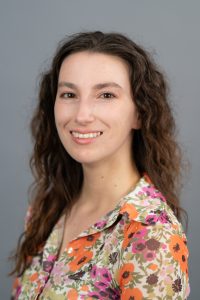
Michelle Cherne, a biomedical engineering and science assistant professor, studies gastrointestinal infectious diseases using models of the gastrointestinal tract called organoids.
When Michelle Cherne wants to pick up a new hobby—most recently, banjo and oil portraiture—she doesn’t idly noodle around or commit vaguely to a few minutes of practice a day.
Instead, she borrows a page from the scientific method she learned decades ago and still uses today.
“I want to figure out the best way to do things and to have a strategy for the fastest way to learn something and succeed,” she says.
Here’s how you can, too.
STEP 1: SURVEY THE FIELD.
Just as scientists survey existing research before launching a new study, Cherne starts her hobby-learning process at the library.
“It’s hard to get accurate information on social media,” she says. “I find way better stuff in print.”
STEP 2: IDENTIFY CREDIBLE SOURCES.
In science, a study is only as strong as its methodology and the expertise behind it. Cherne applies the same scrutiny to the resources she selects for her hobbies: Are the sources she’s found coming from established experts? Are they offering specific, actionable guidance rather than general descriptions? She knows that a well-targeted beginner’s guide—like her beloved Bluegrass Banjo for the Complete Ignoramus—beats an advanced resource that would leave her flummoxed.
STEP 3: DESIGN YOUR APPROACH—THEN, PUT IT TO THE TEST.
Scientific studies are conducted with specific reasons behind them—and Cherne says hobbies should be, too. Her banjo aim was to learn the instrument well enough to join a casual band. From there, she created an efficient practice strategy around that goal.
Cherne, who can now pick her way through the bluegrass classic “Long Journey Home,” says her approach ensures that she makes meaningful progress on hobbies she loves.
With the scientific method, “you’re not going around in circles as much,” she says. “You become good sooner, with less frustration.”
Michelle Cherne
“I want to figure out the best way to do things and to have a strategy for the fastest way to learn something and succeed.”
I’m an aviation sustainability researcher. Here’s how to …
Shrink your environmental footprint.

Brooke Wheeler is an associate professor in the College of Aeronautics whose research spans aviation sustainability and environmental sciences, including electric aviation.
Brooke Wheeler doesn’t just research aviation sustainability—she lives it. As the owner-operator of a Cessna 172 Skyhawk, she’s made modifications, including electronic ignition and tuned exhaust upgrades, which have reduced its fuel consumption by about 15%.
But that’s just one of the ways she tries to be thoughtful about her environmental impact: She and her husband both own hybrid vehicles; they’ve effectively shifted their electricity toward renewables by buying into a solar plant through Florida Power and Light Co.; and they buy local, in-season food as often as possible.
The key to making a true impact as an individual, she says, is to consider your total resource use systematically.
“When we do an ecological footprint analysis in my class, we look at transportation, the flights you take for vacation, whether you live in an apartment or single-family home, and where you get your electricity,” she says, ticking off a handful of the variables her students investigate.
You can’t change everything, so look to the areas you might have more control over.
“There are a lot of things we can do to move the needle to decrease their resource use,” she says.
I’m an accidental academic. Here’s how to …
Solve any problem more creatively.
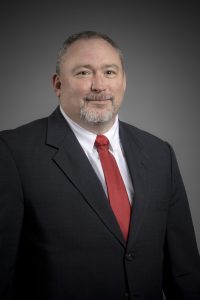
Marshall Jones is an assistant professor in the School of Psychology and director of the Center for Applied Criminal Case Analysis. He brings his expertise as a practitioner and academic to work on challenging problems linked to sexual assault and kidnapping for organizations, including the FBI.
Marshall Jones spent more than a decade in law enforcement before landing in an academic role, a winding path that shaped how he tackles complex problems today. Moving between the field and the classroom taught him that the best solutions rarely come from following a standard playbook. Instead, they come from a set of mindsets that lead to progress on problems many might consider too messy or too difficult to pursue.
MINDSET 1: AVOID ASSUMPTIONS.
A big problem in applied criminal justice research is letting preconceptions drive analysis. The best researchers know that what seems obvious at first glance often isn’t.
For example, while Jones and other researchers were studying sexual assault in Indian country, they were flummoxed by the high percentage of uncles involved in such assaults—but nuances in language helped uncover the answer.
“In a tribe, an uncle is not necessarily a brother of your mom or your dad—it’s a cultural uncle,” Jones says.
The term simply cast a wider net than researchers had assumed.
If you want to get to the truth, Jones says, “set everything you think you know about a topic at the door.”
MINDSET 2: BE RELENTLESS.
When Jones wanted to study long-term outcomes for individuals who started offending as juveniles, he knew he’d come up against roadblocks. But with the help of a handful of student workers and 18 months of work that included navigating databases across 38 states, he and his collaborators ultimately tracked the criminal careers of those juvenile offenders over the course of 25 years.
“It can be mind-numbing,” he admits. “But if you have a curious mind, you can pursue unique opportunities.”
MINDSET 3: INVITE ADVERSARIAL PERSPECTIVES.
It’s easy to want to work with people who share your view of the world—but that often doesn’t lead to the best results, Jones says.
“Collaborate with people who don’t see things like you do,” he says. “You need a devil’s advocate, because it’s in that intentional conflict of ideas that you get the good stuff.”
Creative problem-solving, he says, comes down to a willingness to challenge yourself at every turn.
“Don’t let conventional models, methods or techniques limit you in seeking an answer.”
Marshall Jones
“If you have a curious mind, you can pursue unique opportunities.”
I’m an astrobiologist. Here’s how to …
Use scale to get perspective about your own life.

Manasvi Lingam, an assistant professor in the Department of Aerospace, Physics and Space Sciences, studies astrobiology, planetary habitability, biophysics and space exploration.
To calculate the probabilities of life in the universe, astrobiologists don’t spend much time on the here and now. They think about timespans of billions of years and distances of trillions of miles to imagine what is possible.
Manasvi Lingam says you don’t need a specific conviction about alien life to recognize humanity’s fragility.
“In my work, you appreciate how many factors have to align,” he says. “We could have had just a little less water, or we could have been a little too close to or far from the sun—everything would have changed.”
While he admits it can be humbling to grapple with humanity’s relative insignificance in the vast universe, he also finds it profoundly moving to be part of a species that has come so far.
“Are we small and negligible? That’s one way to look at it. But it’s also true that we have learned and done so much in this world. We have electricity and heating; we have cars and planes; and we have science, which enables us to understand something about what happened 13 billion light-years away, back when the universe was a baby. We are tiny. But we have made so much headway, and I think that is beautiful.”
Manasvi Lingam
“We are tiny. But we have made so much headway, and I think that is beautiful.”
I’m an ecological engineer. Here’s how to …
Design the backyard of your dreams.
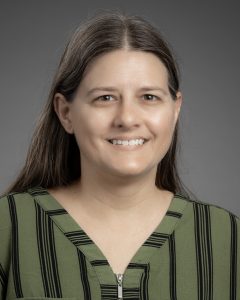
Emily Ralston is a research assistant professor in the Department of Ocean Engineering and Marine Sciences.
Emily Ralston has been at Florida Tech for more than 20 years. But in a way, the problems she tackles have always been the same.
“I’m always asking the question: Why do things end up where they are?” she says.
In her research, it means she studies why marine organisms colonize certain surfaces, such as boat hulls and pilings, where we might not otherwise want them.
What she’s learned is that the answer is surprisingly straightforward: Things end up where they are because the environment is designed for it.
The flip side of that idea is also true: Design the right conditions, and what you want will follow. It’s an insight that Ralston has applied relentlessly to her own yard.
Her quarter-acre plot is a vibrant space packed with rows of vegetables, a small grove of fruit trees and herbs. Her plantings attract an abundance of butterflies and bees, cardinals and kestrels, squirrels and rabbits. It didn’t happen by accident—she designed her environment in ways that, essentially, guaranteed it.
Here’s how she’s made it work.
START WITH YOUR LARGER VISION.
If you know what you want, you can make sure every decision reflects that larger goal, Ralston says.
“Before I put anything in my yard, I ask: Does it provide food for me? Does it provide food for the pollinators? Does it provide food for wildlife?”
She wants to answer “yes” to at least one—and, ideally, all three—of those questions.
PRIORITIZE NATIVE SPECIES.
Unlike their non-native counterparts, native species are often more likely to survive an area’s extreme weather conditions—and thrive in more-typical weather.
“Most of our plantings came through this year’s freeze just great,” she says.
DON’T BE AFRAID TO TRY SOMETHING UNUSUAL.
While Ralston likes to grow many common fruits and vegetables—mangoes and avocados, lettuce and peppers—she doesn’t shy away from a few unexpected varieties.
“We grow Asian long beans that are almost a yard long and purple garden beans that are sweeter than green beans,” she says. “You don’t just have to plant what you would find in a typical grocery store.”
I’m an accounting expert. Here’s …
Why numbers are never the point.
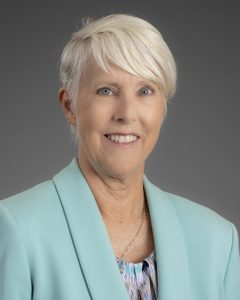
Phyllis Okrepkie is a visiting assistant professor in the Bisk College of Business.
When Phyllis Okrepkie started her work in accounting, she saw the world in black and white: debits and credits, dollars and cents.
But over the course of a career that took her from an adjunct faculty member teaching 30 students to the president of an accreditation organization serving 200 member schools, she came to internalize an essential truth about any financial spreadsheet: It can never truly tell you what’s important.
“We may be taught in business school that what increases the bottom line is a good decision, and what decreases the bottom line is a bad decision,” she says. “But there’s a lot that’s not quantifiable. There’s always a bigger picture.”
It’s an insight that might sound obvious, but it has major implications for the way businesses, or any of us, weigh a decision.
When a company considers closing a location, the spreadsheet might say it’s a smart move, but that analysis misses what can’t be quantified, like the jobs lost in a community and the reputational damage to the company when people feel abandoned, Okrepkie says.
“It’s important to think holistically,” she says.
Once adopted, it’s a mindset that’s hard to leave at the office. Okrepkie says that shift changed the way she sees something as simple as lawn care.
The old, black-and-white accounting mindset would have said: It’s my property; I’ll fertilize and spray as I see fit. But thinking more broadly, she realized that the choices she made for her own yard rippled beyond it.
“When I look at the bigger picture, I realize that what I’m doing impacts the entire environment: the Indian River Lagoon, the ocean, everything,” she says.
She tries to pass these lessons along to her students.
“You can be a bean counter, and that’s all you do—count the numbers,” she says. “Or you can look at how the numbers impact people, community and everything else.”
The bottom line, she’s found, is never really the bottom line.
Phyllis Okrepkie
“You can be a bean counter, and that’s all you do—count the numbers. Or you can look at how the numbers impact people, community and everything else.”
This piece was featured in the spring 2026 edition of Florida Tech Magazine.