By Enrique Molinares
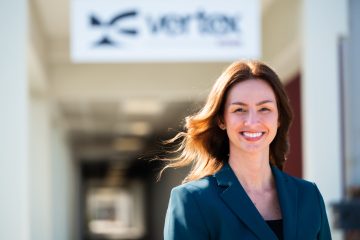
Pulitzer Prize-winning journalist Melinda Henneberger captivated students at Florida Tech’s Free Speech Week in February, offering insights into investigative journalism, ethical reporting and the evolving challenges of free speech.
The event, sponsored by The Crimson student newspaper, provided aspiring journalists with the opportunity to learn from one of the industry’s most seasoned and decorated reporters.
Henneberger’s passion for journalism began when she was just 3 years old, she said, noting that her mother insisted that even as a toddler, she would declare her ambition to be a journalist.
From an early age, she displayed a strong inclination for reporting and storytelling, launching her first newspaper in third grade and another in seventh grade—one that, remarkably, still exists.
Her family strongly discouraged her from pursuing journalism because they felt it was not a practical career choice despite her passion for the field, and her teachers found her inquisitive nature challenging.
“My constant questioning probably drove the nuns nuts,” she said.
Her determination, however, never wavered.
After studying at the University of Notre Dame, Henneberger embarked on a career that began in local newsrooms and led her to work at top media outlets across the country. She worked at The New York Times for a decade as a Washington correspondent and later held key editorial roles at The Dallas Morning News, USA Today and The Kansas City Star. She was also the founding editor of Politics Daily, a pioneering digital publication under AOL.
Her work has covered everything from presidential politics to corruption within the justice system. She has tackled high-profile investigations, including wrongful convictions, sexual assault cases and law enforcement misconduct.
Before her 2022 Pulitzer Prize victory for editorial work revealing Kansas City’s governmental corruption, Henneberger had reached the final round three times.

During her presentation, Henneberger highlighted how journalism serves to sustain democratic systems while holding authority figures responsible.
“Your job is to tell the truth and do the best you can,” she said. “It’s not really about getting the outcome you want—it’s about getting the facts right and letting the truth stand on its own.”
She also discussed the increasing challenges facing modern journalism, particularly in an era of growing public distrust.
Henneberger openly addressed the ethical challenges journalists encounter during sensitive-subject coverage. She shared a recent story about a firefighter accused of felony property damage, explaining how she uncovered new information that made the situation more complex.
“I told him, ‘I’m happy to go ahead with writing your story, but I’m not leaving out the part where you were accused of driving drunk with your son in the car,’” she said.
To her surprise, the man still wanted the story published so that people might better understand PTSD in first responders.
Students were particularly interested in her advice for aspiring journalists. Henneberger stressed the importance of crafting a compelling lead.
“If you don’t write a compelling first sentence, no one will ever get to the rest of your story,” she said. “Especially now, when there are thousands of things they could read today. If you don’t grab them by the lapels, they’re gone.”
She also emphasized the power of simplicity in writing.
“Simple words are better than fancy ones,” she said. “You’re not running a language lab. You’re trying to bring people in.”
She credited The Elements of Style by William Strunk Jr. and E.B. White as one of the best resources for young writers, particularly for its emphasis on concise and vigorous writing.
“One of my first editors told me, ‘What you leave out is as important as what you put in,’” she recalled. “Take out the extraneous stuff, and let your words shine.”
Free speech discussions progressed from journalism subjects to the larger campus community.
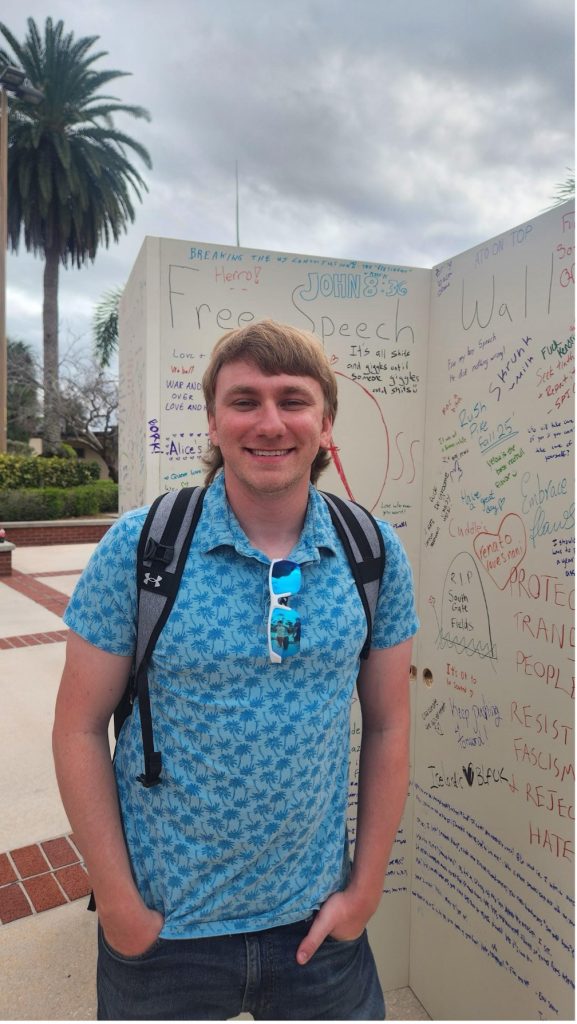
Spencer Tab, an aerospace engineering graduate student, shared how a governance dispute prompted extensive free speech discussions during his undergraduate studies at Rensselaer Polytechnic Institute in New York.
He then emphasized the importance of free speech, while urging students to learn their rights. Free speech rights exist for Americans, Tab said, but student status modifies these rights.
“You should check your school’s code of conduct to know exactly what’s allowed and what isn’t. But for the most part, you should feel free to express yourself,” he said. “Most of the time, when people express themselves, it’s a net gain.”
Ted Petersen, associate professor of communication and director of student media who helped organize Free Speech Week events, praised Henneberger’s visit, calling it an invaluable experience for students.
“Hearing from someone with Melinda’s background gives students a real sense of what it takes to be a journalist,” Petersen said.
Henneberger’s keynote address came in the middle of the week, which included other activities, such as the Free Speech Wall, a slam poetry event hosted by The Kaleidoscope student-run publication and Panther Radio, the “Live Free or Eat Free: You Can’t Do Both” First Amendment rights demonstration, and a local news panel featuring reporters from Florida Today.
“Journalism is tough,” Henneberger said. “But if you love it, there’s no better job in the world.”