Florida Tech may be widely recognized for being strong in STEM, but it’s also home to a thriving community of artistic expression: the music program. Offering a variety of ensembles and performance opportunities supported by dedicated faculty, Florida Tech’s music program gives students a way to harmonize their academic pursuits with their love for music.
Florida Tech’s music program is unique in that it doesn’t offer a degree. Instead, its focus is on flexibility and accessibility, making it a popular choice for students seeking a break from the demands of their science, engineering, or business courses.
There are several ways for students to get involved in music at Florida Tech. One of which is through the music minor. The music minor offers a well-rounded musical education, including courses in music theory and ear training, applied music, and a range of electives, like jazz, Western classical music and even video game music.
This provides students with an opportunity to learn from experts and practice with peers.
One of the program’s key strengths is its accessibility to students from all majors, enabling future engineers, psychologists, and biologists to pursue their musical passions alongside their primary studies. The music program becomes more than just an outlet for artistic expression—it serves as a stress reliever and a powerful tool for building community.
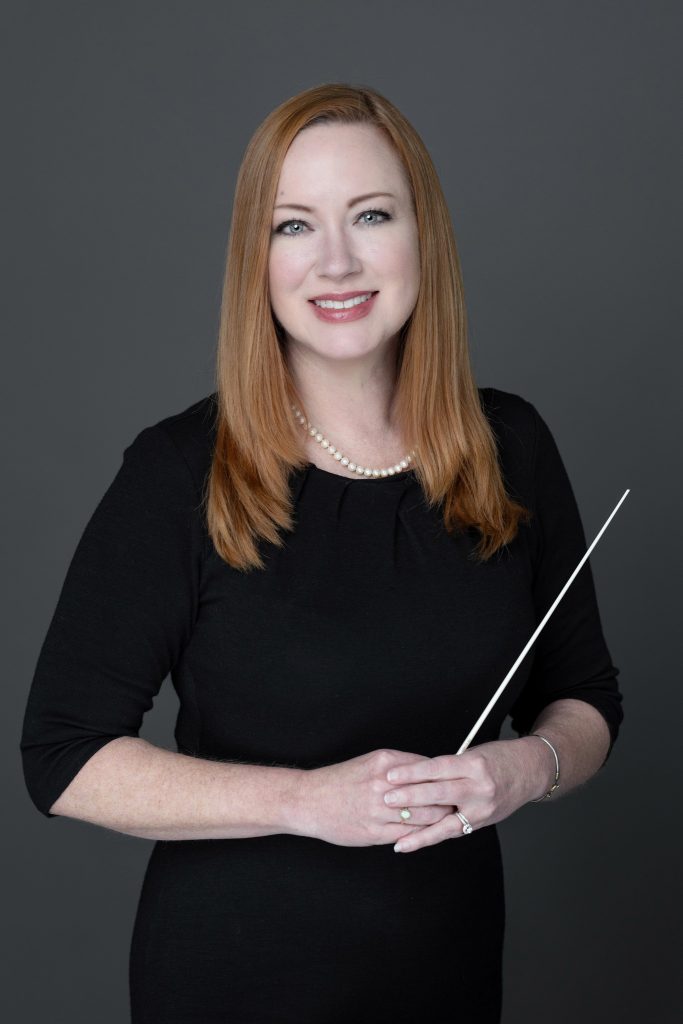
“We try to encourage students to practice, but while a music major might practice at least four hours a day, I’d be happy if our students practiced 20 to 30 minutes daily. We try not to overschedule or stress them out—the program should do the opposite. It is purely for their enjoyment and to continue their love of music,” said Music Program Chair Eliza Healy.
Healy has been with Florida Tech since the music program’s inception in 2010 and has served as chair for the last four years. She also teaches the program’s concert choir, string ensemble, and applied voice courses.
“Like any program that was started from infancy, the music program began small. There were only about 10 to 15 students in each ensemble, and our semester showcase concerts consisted of one large concert with each group doing a few songs,” Healy said. “Now, our numbers have grown to 30 to 40 students in each of the larger ensembles, and each ensemble performs their own full-length concert.”
Students have their choice of five ensembles to join: Concert Band, Jazz Band, Concert Choir, String Orchestra, and A Cappella.
These ensembles provide both beginners and experienced musicians with a platform to showcase their talents. Concert Band, the program’s largest ensemble, features 40 musicians.
“The music program is going strong with over 150 students in the ensembles and another 50 in our group courses and music theory,” Healy said.
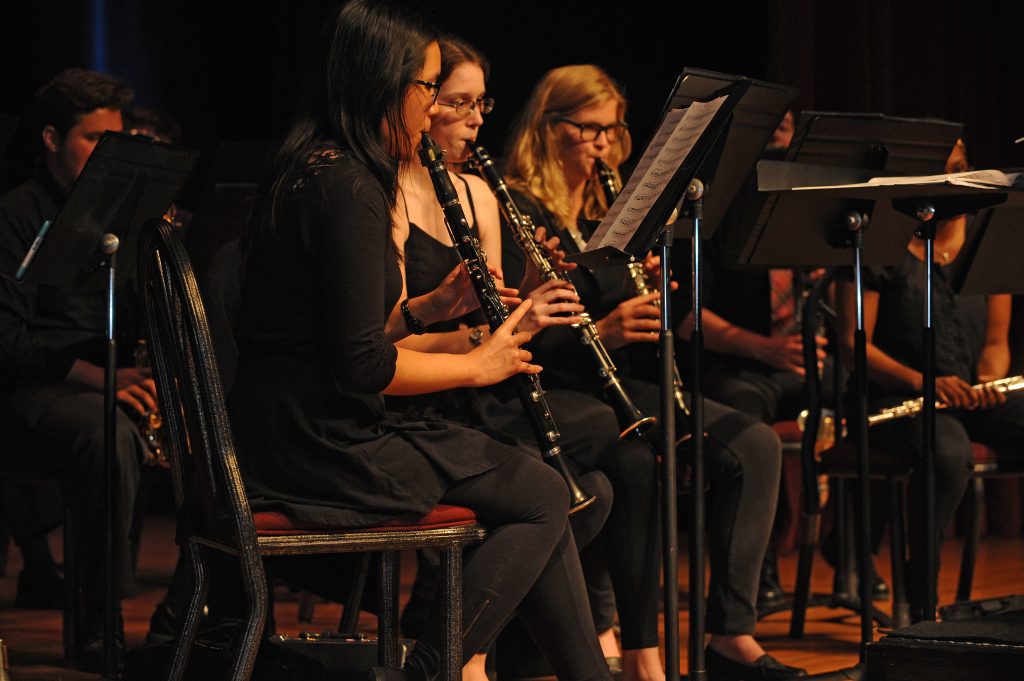
One of the most exciting aspects of Florida Tech’s music program is its wide array of performance opportunities. Public performances are a key element of the program, and students regularly participate in concerts, recitals and community events.
Most performances take place at Gleason Performing Arts Center on Florida Tech’s main campus. However, there are opportunities for off-campus performances, as well.
“Sometimes, we take students off campus. For example, our choir visits an assisted living facility once a semester to perform there. Our Jazz Band even performed in Atlantic City at the New Jersey Music Educator’s Conference last spring,” Healy said.
The music program also offers private studio lessons for students interested in improving their skills. By participating in these lessons, students can receive personalized instruction from highly experienced faculty members.
“The private lessons are a really nice complement and something special we offer for the students. We have high strings [violin, viola], low strings [cello, bass], woodwinds, high brass, piano, and voice lessons,” Healy said.
In addition, the music program offers Music Service Awards and Band Scholarships to support students involved in ensembles. These scholarships are awarded based on auditions and require students to actively participate in performances throughout the academic year. Auditions are not just based on skill but experience and leadership, as well.
Looking ahead, the long-term vision is to establish a dedicated music building as a rehearsal space that will enhance the program’s offerings and provide a better environment for students.
“I truly believe the program deserves it,” Healy said.
For upcoming concert dates, check out the music program events schedule, and visit the university catalog or schedule an appointment with an academic advisor for more information about the music minor.