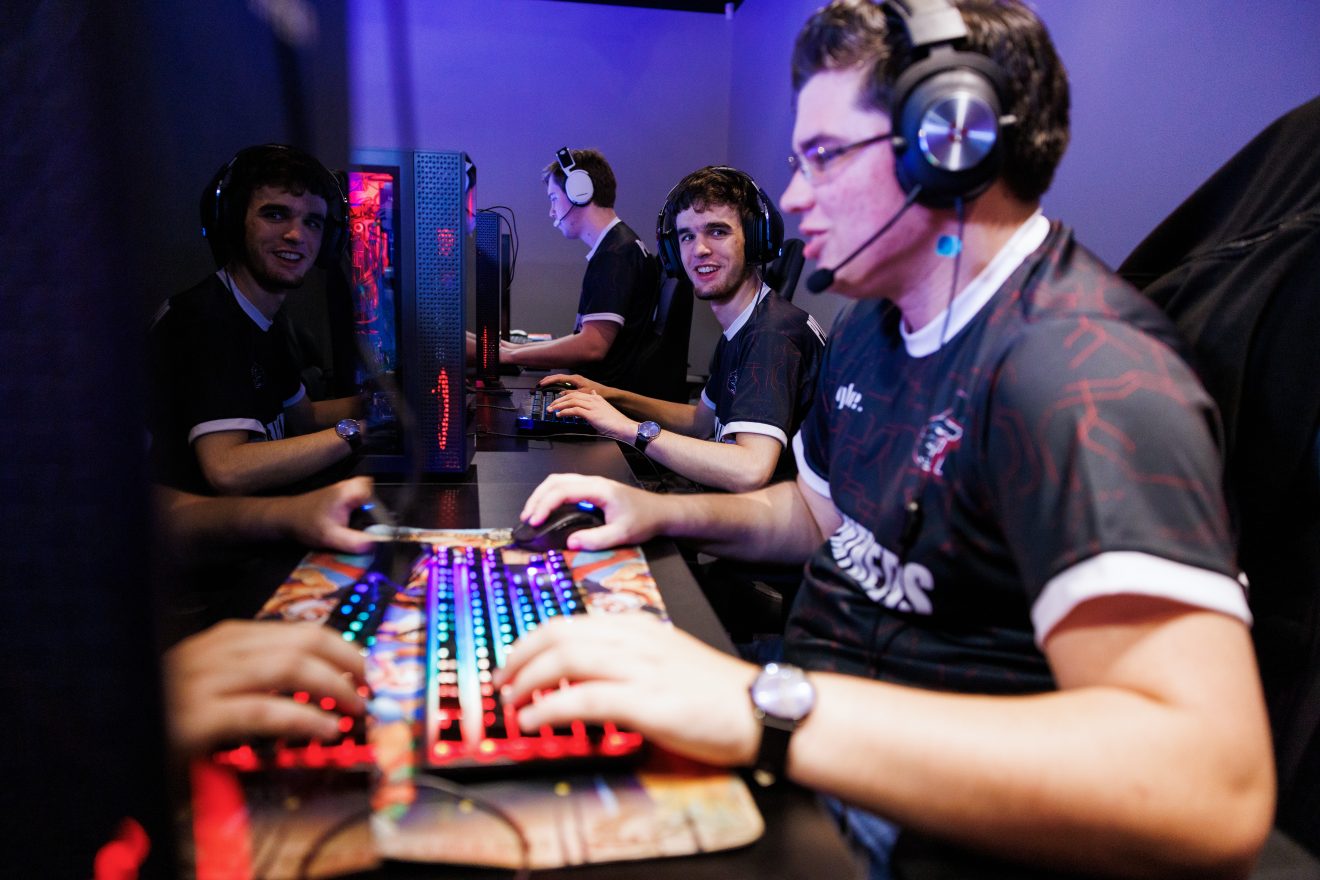
Esports at Florida Tech has quickly grown into one of the university’s most active and dynamic student outlets since its inception in 2021. With a dedicated facility, competitive success and strong institutional support, the program is entering a new era under Director of Esports Danielle Sirekis, a leader determined to elevate both the competitive and community experiences of Florida Tech gamers.

Sirekis joined Florida Tech in January 2024 after serving as the esports head coach at Lawrence Tech, where she built the program from the ground up. A two-time finalist for National Association of Collegiate Esports (NACE) Director of the Year, she oversaw the development of multiple all-conference student-athletes and established a competitive, inclusive culture.
When she learned Florida Tech was searching for its next director, she jumped at the opportunity. “I like smaller universities like Florida Tech because they have a closer connection with students. I was already sold once I found out that Florida Tech was by the ocean, but when I saw the campus, its beauty took my breath away,” Sirekis said.
She was also drawn to something most schools can’t offer: a standalone 5,800-square-foot esports facility, the Ruth Funk Esports Center. “Florida Tech’s esports center pulled me in. It is everything I wanted. The program is already well developed, so I felt like I could grow here and be a part of something bigger,” Sirekis said.
A rarity in the esports industry, Florida Tech esports has only ever been led by women. Sirekis’ predecessor, Dana Hustedt, served as the program’s first director and was instrumental in its early success. Today, the esports program is led by not one but two full-time female employees: Sirekis and Assistant Esports Operations Manager Anna Patterson, who has been a key contributor to the program’s positive, respectful and inclusive culture since joining in 2023.
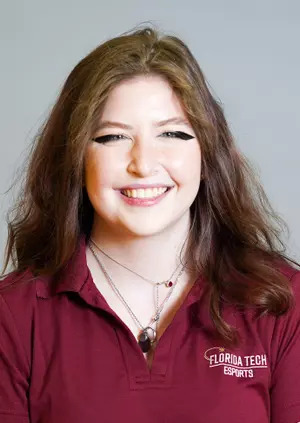
Patterson is no stranger to esports. As a student at Florida Southern College, she competed in Overwatch for four years, serving as team captain and in-game leader. In these roles, she guided and strategized for her team during gameplay.
Now, Patterson coaches Florida Tech’s Overwatch teams and manages most of the sub-teams. In addition to coaching, she handles https://news.fit.edu/wp-content/uploads/2013/11/dr_wiggenhorn1-1.jpg for the program, manages the student staff at the esports center and oversees general building operations. Her leadership experience made the transition natural.
“It is definitely not easy being a woman in esports,” Patterson said. “Working with the students here, they completely respect everything we have to say. If you know your stuff, they will respect you, and if you respect them, they will give it right back to you.”
Florida Tech esports fields two competitive squads—Team Crimson and Team Black—with sub-teams in Overwatch 2, Rocket League, Valorant, League of Legends and Super Smash Bros. Ultimate. Team Crimson represents the university’s highest competitive level; Team Black serves as a developmental roster.
The program has already delivered strong results. In fall 2023, Overwatch Team Crimson won its National Esports Collegiate Conference (NECC) division championship. Valorant Team Black finished as its NECC division runner-up, Rocket League Team Black placed third in its division and Super Smash Bros. Ultimate Team Black earned third in NACE competition.
Florida Tech esports also partners with the School of Behavior Analysis to offer behavioral performance coaching to its teams. Through assistant professor of behavior analysis Kaitlynn Gokey’s EEEK (Experimental Analysis of Behavior, Economics and Esports with Kaitlynn) lab, performance coaches use analytics, direct observation and data collection to help improve game-specific skills, communication and overall team cohesion and performance.
For the students involved, Florida Tech esports offers structure, support and opportunities similar to traditional athletics: limited roster spots, a dedicated facility, practice time, team gear, travel opportunities and competitive seasons. Tryouts and recruitment shape rosters each year.
Computer science senior and Valorant player Michael Komar has been part of the program since his freshman year. He credits esports with helping him grow as a leader.
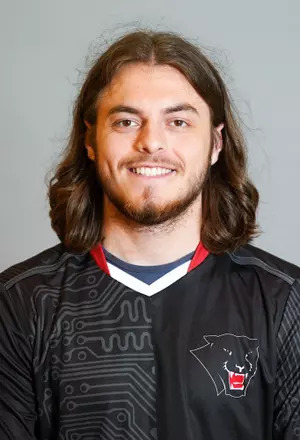
“The program has helped me a lot with my time management skills, as well as with being responsible for other players, which makes me a better leader and allows me to share my input and experience,” Komar said.
Students like Komar reflect one of Sirekis’ biggest priorities: growth. She believes that with strong structure and leadership—led by her and supported by her students—the program can reach new heights.
One of her first major initiatives introduced student leadership positions. While the esports center has always had student workers, Sirekis is giving her most trusted students meaningful responsibilities and real professional experience.
Aerospace engineering senior Mathieu Côté, who has worked at the esports center since it opened, is one of those students. Although he isn’t a competitive player, the center has become a major part of his life.
“I have gotten to know so many people at the center who I really enjoy hanging out with, talking to and spending time with. It has become a major social hub where I have formed meaningful connections,” Côté said.
Another student worker, astronomy and astrophysics senior Brianna Coffelt, describes herself as a “super casual” gamer who only got into gaming after working at the esports center. She often recommends the space to students looking for a relaxed, welcoming environment to socialize.
“Esports can be daunting because it seems like everyone who plays is really good,” Coffelt said. “But the esports center offers a welcoming space where it’s okay to just play for fun, without the pressure to be great right away.”
That blend of high-level competition and casual community is central to the program, and under Sirekis, the next stage of growth is already underway. Her priorities include creating a professional production studio for livestreaming, hosting more events and deepening engagement with student organizations. She also wants to expand recruiting to engage more high school students and compete in major state and national events, boosting visibility.
For students who want to get involved competitively or behind the scenes, there’s no shortage of avenues.
“We have non-gaming opportunities for those who are knowledgeable about gaming,” Sirekis said. “We have shoutcaster, streamer, production and tournament organizer opportunities. We need students who want to gain experience in project management, https://news.fit.edu/wp-content/uploads/2013/11/dr_wiggenhorn1-1.jpg, writing and event management—all great résumé builders.”
Adjacent to the competitive program is the Florida Tech Esports Club, open to any Florida Tech student regardless of ability. One major appeal of the club is that it can play many more games than the competitive team, which is limited to certain sanctioned titles. Among students’ favorites: Apex Legends, Call of Duty, Fortnite, NBA 2K and Rainbow Six.
With strong leadership, a premier facility and a growing community, Florida Tech esports is positioned for continued growth. Sirekis and Patterson want to build a program that adapts to student needs and provides a sense of belonging.
“I want to create an experience for students that makes them feel connected to the university,” Sirekis said. “When they come back here in 10 or 20 years, I want them to say, ‘I was on the esports team, and it changed my life.’”
Details about Florida Tech esports can be found on the esports website. Esports events are promoted on the program’s Engage page and social media platforms.