In September, Florida Tech senior Joshua Sheldon joined a team of fellow aspiring engineers to participate in INIT FIU’s ShellHacks 2024, Florida’s largest hackathon, in Miami. The event brought together more than 1,400 students from across the globe to learn the latest technologies, build innovative projects, and network with top companies.

Sheldon will remember the event—his first hackathon—not just for the experience but for the remarkable success that followed.
A computer science major completing a co-op as a software development intern at NASA-Kennedy Space Center, Sheldon teamed up with fellow interns Eduardo Bidot Lopez, Sukaina Zaidi, and Luke Ramjitsingh to develop a groundbreaking project called ESPER. Their goal: to make the internet safer for people with epilepsy.
ESPER, short for Epileptic Seizure Prevention and Early Response, is a Google Chrome extension designed to dynamically adjust video brightness, smoothing out rapid changes to protect users from potentially triggering seizures. It also gathers metadata about videos, highlighting sections where hazardous visuals might occur. This metadata can be analyzed through an interactive dashboard, offering insights and transparency to users.
Sheldon played a pivotal role in ESPER’s creation, contributing to the luminosity adjustment formula, backend infrastructure, database schema extension implementation, and Snowflake setup development. He also deployed the backend, ensuring ESPER’s functionality from start to finish.
The team chose JavaScript because it was required to create a Chrome extension, which they preferred over a Python script. A Python script would have been less user-friendly and more difficult for non-technical users to implement. The goal was to make ESPER as accessible as possible, minimizing the barrier to entry.
However, this decision came with challenges, including navigating YouTube’s strict security policies and complex math for seamless playback synchronization. The team had to shift from their initial plans but ultimately found a workable solution.
Projects at ShellHacks 2024 were judged based on creativity, execution and impact—and ESPER stood out.
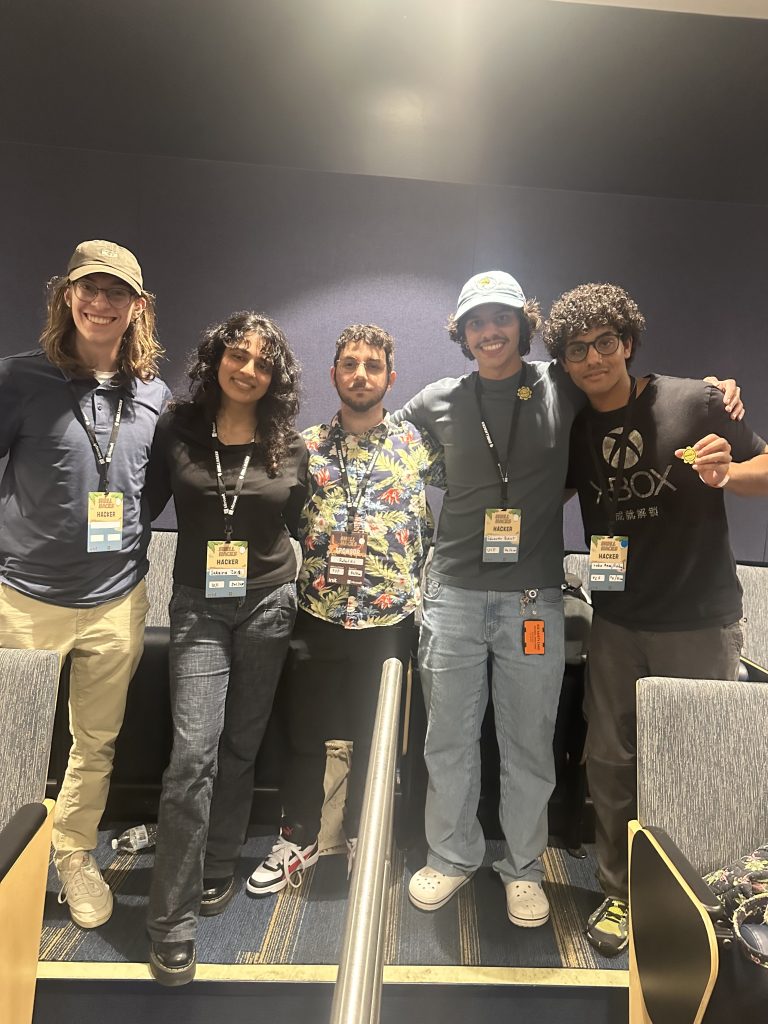
ESPER earned top honors by securing first place from event sponsor Assurant and winning the award for Best Overall project out of 257 submissions. Team members were awarded an Apple MacBook Air 13.6 M2 and an MLH Winner pin for their achievement. Additionally, Assurant gifted the team a variety of prizes, including a SwissGear Scansmart laptop backpack, a Yeti tumbler, a portable dual-port charger, and more.
“My coursework and research were absolutely critical to my success at ShellHacks,” Sheldon said. “I used programming languages and frameworks that I learned through my projects and work at Florida Tech, and without that existing knowledge, I wouldn’t have been able to work with half the confidence and efficiency that I did at the hackathon.”
For Sheldon, attending ShellHacks 2024 was about more than just winning.
“My goal heading into my first hackathon was simply to have fun designing with my friends, developing and learning software, and giving it my all doing what I love,” Sheldon said. “But I found so much more than I could’ve imagined.”
Although the hackathon has ended, Sheldon and his team remain focused on the next steps for ESPER. The team is exploring the potential for using machine learning and artificial intelligence to enhance ESPER with more advanced capabilities. These possibilities include targeting certain areas of a video screen or inserting new frames rather than solely relying on filtering the existing video.
Driven by their belief in ESPER’s potential to positively impact lives, the team has returned to the drawing board, brainstorming ways to refine and enhance the project for an official release. The journey with ESPER is just beginning—but its potential to make a difference is already clear.