When the country of Serbia sought to assess the environmental literacy among its 7th graders, its educators used a U.S.-developed survey called the Middle School Environmental Literacy Survey, or MSELS.
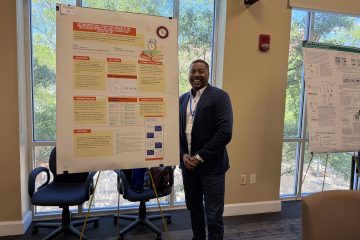
In late March, the Central European country did one better: it invited one of the members of the MSELS research team to come for a visit to work with the team behind this effort and to lecture on environmental literacy and its value. That researcher is Florida Tech’s Tom Marcinkowski, professor in the Department of Mathematics and Systems Engineering and the Sarkis Acopian Professor in Environmental Education.
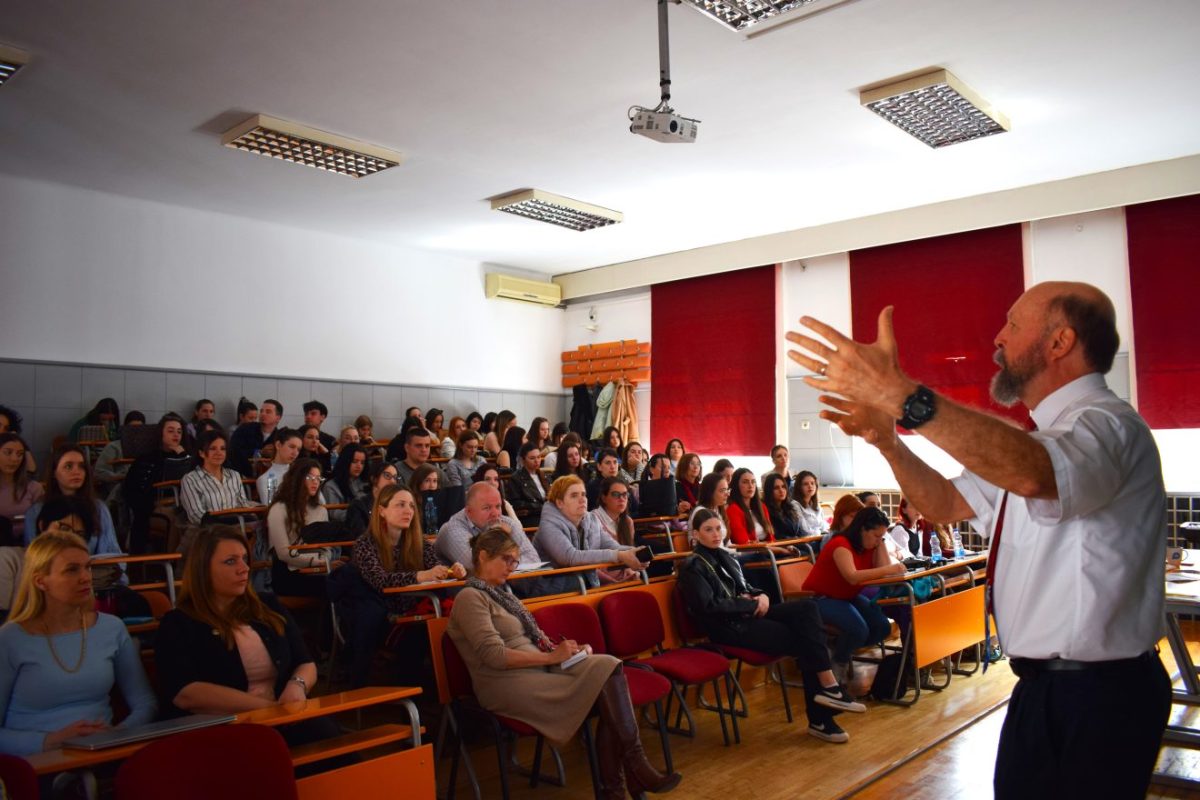
Over nearly a week in the capital Belgrade – this was how he spent his spring break – Marcinkowski planted a tree at an elementary school, lectured at the University of Belgrade on the topic, “What is environmental literacy, what it looks like, and why it matters for Youth and Teacher Education – Experience from the USA,” and also at the Atrium of the National Museum of Serbia on the topic “Can we be environmentally literate if we are not sensitive to the natural environment and ecological problems? – How do we understand, measure and enhance environmental literacy?” He also spent time with members of Project ELIPS (Environmental Identity of Primary School Students in Serbia), the group of Serbian educators and researchers leading the student survey project as well as well as with another interested researcher in planning and architecture at the University of Belgrade.

In an interview broadcast nationally on the state-owned Radio Television of Serbia (RTS), Marcinkowski spoke about the importance of environmental education.
“At school, children learn about nature, food, water and what happens to waste,” he said. “People need to acquire knowledge and skills to be able to influence the solution of environmental problems – loss of biodiversity, carbon emissions, climate change.”
There was a little time for sightseeing at the end, including a tour of Belgrade and a visit to the city’s Jevremovac Botanical Garden.