Florida Tech’s Andrew Palmer, an associate professor of biological science, is collaborating with researchers at Winston-Salem State University (WSSU) in a NASA-funded initiative to test a novel method of growing crops in space.
The agency awarded $300,000 to the project, “LICH – Assessing the Efficacy of Bioleached Nutrients from Lunar Regolith in Hydroponic Systems for Fruit-Bearing and Leafy Green Crop,” which is led by WSSU associate professor Rafael Loureiro.
Loureiro will work with both Palmer and Anna Simpson, a researcher from Blue Marble Space Institute of Science, to explore how microorganisms such as bacteria and fungi can promote extraterrestrial crop growth by dissolving nutrients that are otherwise trapped in compact lunar soil (regolith) for plants to absorb – a process called bioleaching.
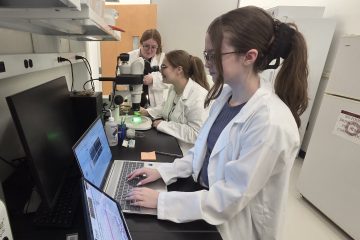
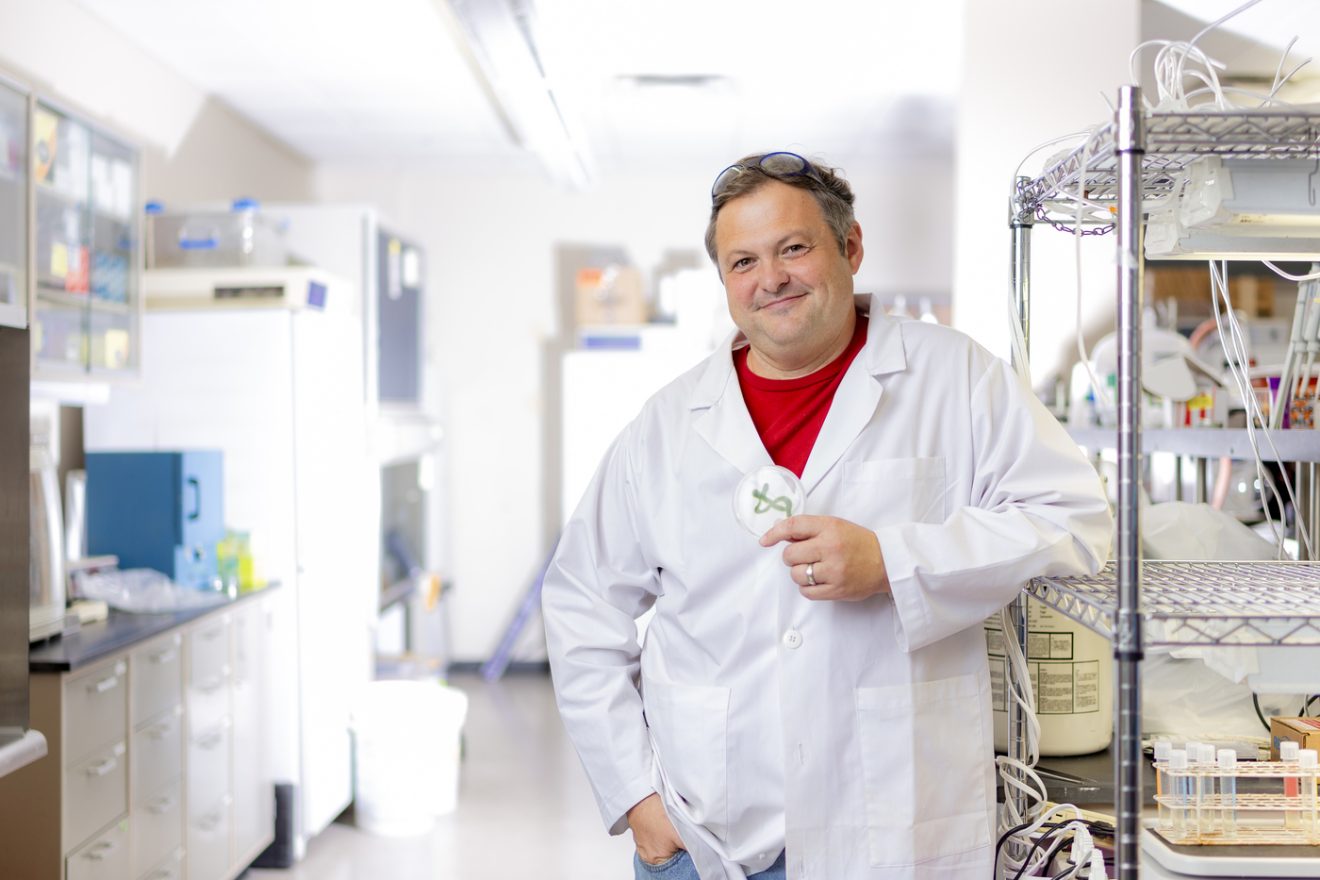
Palmer’s lab is primarily responsible for providing the various species of bacteria that will be used for bioleaching. He and his students will help train undergraduates at both WSSU and Florida Tech on how to implement and observe the bacteria at work.
The planted microbes will absorb the nutrients embedded in the regolith through a hydroponic system – one where plants are grown in water instead of soil. This system transports the nutrients to the plants’ roots more efficiently.
According to Palmer, hydroponic plant growth and regolith-based agriculture are often thought of as separate strategies for space agriculture. However, he believes that the techniques they will use to mine and utilize nutrients stored in regolith could be beneficial to improving space crop growth from any substrate – not just lunar soil.
“This is a real step forward into the next generation of space agriculture, tearing down artificial barriers to generate new technology,” Palmer said.