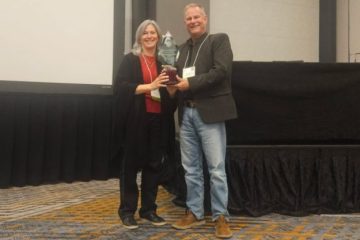
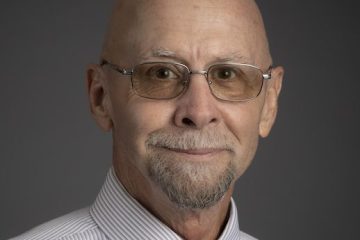
Professor Emeritus Richard Turner joined several Florida Tech alumni and dozens of other scientists from academia, government and the private sector in a 10-day burst of intense species discovery in the Indian River Lagoon known as the 2025 Ocean DNA Benthic BioBlitz.
It’s a formal name for an informal but important practice. National Geographic defines a bioblitz as “an event that focuses on finding and identifying as many species as possible in a specific area over a short period of time.”
(That organization should know because a 2010 event at Biscayne National Park off Florida’s Atlantic coast is considered the first marine bioblitz in the United States.)
The Ocean DNA event, which as the name indicates was focused on the benthos – the flora and fauna on the bottom or in the sediments of the IRL – was held from June 8-18 and based at the Smithsonian Marine Station in Fort Pierce. Over that time, invited scientists such as Turner and others catalogued roughly 1,800 specimens from 32 sites. DNA from the specimens will add invaluable data to the marine station’s DNA reference libraries.
Participants had specialties in certain marine animal groups. For Turner, it was echinoderms (starfish, sea urchins, sea cucumbers and brittlestars), though he also worked on identifying mollusks, a broad group that includes oysters, clams and other bivalves.
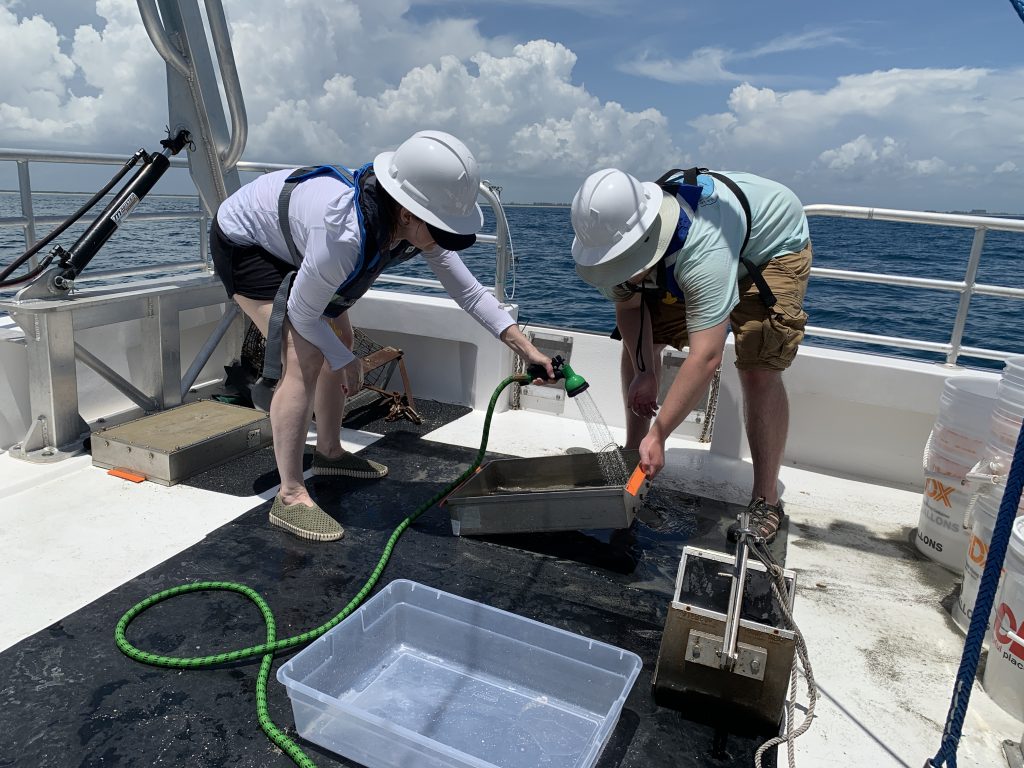
Turner said they spent the mornings sampling off boats or by wading, returning their finds to the lab, where a different group processed the samples. Animals were then distributed to the Smithsonian Marine Station labs, where the specialists were working to identify the animals to species level. Then, each animal was sent down the hall to others who photographed it, took samples for DNA analysis, and prepared specimens for deposition in museum collections.
The bioblitz was co-organized by Florida Tech alumna Holly Sweat, ’10 M.S., ’16 Ph.D., a marine community ecologist and head of the Benthic Ecology Program at the Smithsonian Marine Station. With over two decades of experience studying microscopic invertebrates, she helps track long-term changes in lagoon biodiversity and curates the Indian River Lagoon Species Inventory.
Two-time graduate David Karlen ’91, ’93 M.S., Ph.D., general manager and Benthic Monitoring Section supervisor at the Environmental Protection Commission of Hillsborough County, and three-time graduate Matthew Scripter, ’01, ’06 M.S., ’15 Ph.D., senior scientist at Ecological Associates, Inc. in Jensen Beach, also participated, Turner noted.