How does someone with a passion for conservation and data combine the two dreams into a reality?
Corrie Presland-Byrne ’21 M.S. found the answer: Attend Florida Tech!
“When I was looking to further my education after receiving my bachelor’s degree, I was thrilled to discover there was a university that offered exactly what I wanted: a degree in conservation technology,” Presland-Byrne says.
Even though she was only on campus for two months before the start of the COVID-19 pandemic caused the campus to close and convert to virtual classes, Presland-Byrne looks back fondly on her Florida Tech experience.
“I’ll never forget the experience of virtually graduating at my parents’ house, with the ceremony streaming on their TV and walking across the living room in my cap, gown and … house slippers.”
Today, Presland-Byrne serves as the director of conservation technology and operations manager at Hammerhead Technology.
Founded in 2019 by her father, Peter Presland-Byrne, Hammerhead Technology focuses on integrating technology into conservation efforts with the main goal of creating technology for the greater good.
“Bad data is worse than no data,” Presland-Byrne says. “So, I work to get clients the most accurate data that helps them reach whatever their end goal is, whether it be for saving animals or protecting the environment. I also do custom application and website development and am the GIS lead for the company.”
One of her research projects is investigating the impacts of human infrastructure on howler monkeys in Costa Rica.
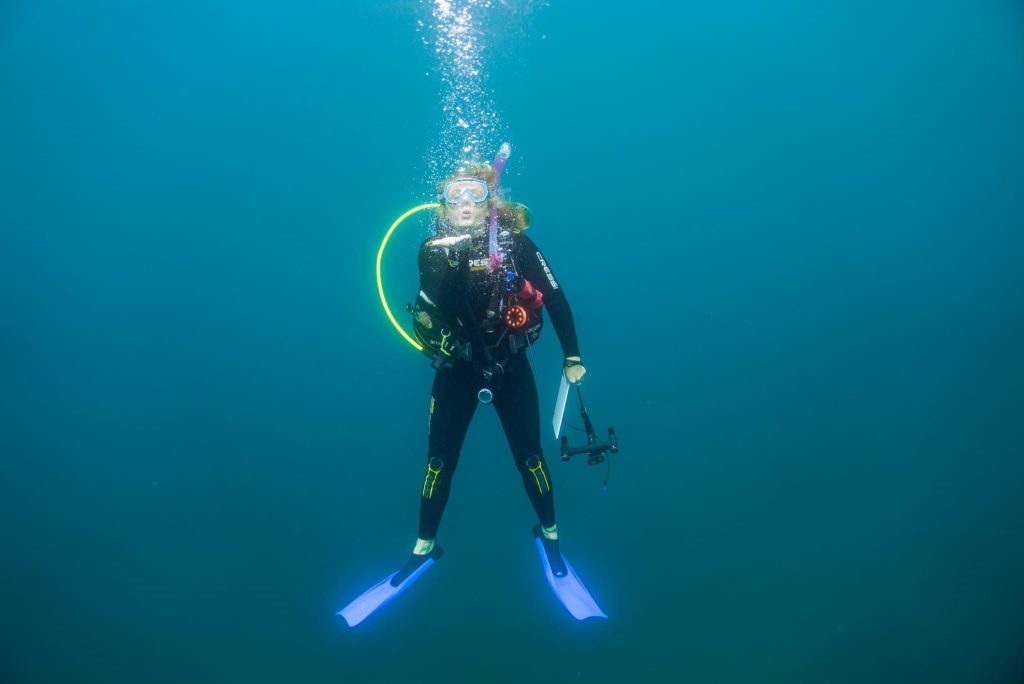
“When I graduated from Florida Tech, I received an internship in Costa Rica to become a scuba diving instructor while also doing field research in my spare time,” Presland-Byrne says. “I fell in love with the country and its wildlife.”
The issue is monkeys’ inability to differentiate between vines or branches and power lines, resulting in frequent electrocutions when they try to cross over roads.
Since the conclusion of her internship and through her work at Hammerhead Technology, Presland-Byrne discovered that it is better financially for electric companies to take preventative action than to deal with the costs of repair, rescue and rehabilitation.
Using GIS technology, Presland-Byrne can track where the incidents happen so that power companies can take preventative action, such as burying the problem power lines, regularly trimming trees the monkeys frequent, building more wildlife bridges and insulating the electric infrastructure.
When Presland-Byrne first started presenting her findings in November 2023, it didn’t pick up traction. But through hard work and determination, the community has started to take notice.
“My research has now been published by Esri on three different occasions, as well as been picked up by a few different Costa Rican newspapers,” Presland-Byrne says. “I’m super excited because my work with the wildlife electrocutions has picked up a lot of interest, and I’m incredibly passionate about it.”
Q&A
FLORIDA TECH CONNECTION: ’21 M.S. conservation technology
WHAT ANIMAL WOULD YOU BE: Bull shark
THREE ITEMS YOU’D BRING IF STRANDED ON A DESERT ISLAND: A flare gun, a water filter and a photo of my family
FAVORITE CONCERT: Lollapalooza in Argentina

This piece was featured in the spring 2025 edition of Florida Tech Magazine.