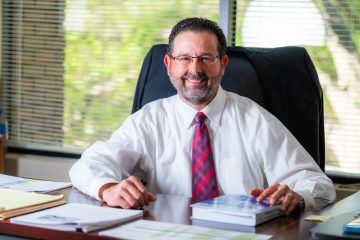
By Don Platt
When I started working for Boeing in 1998, after receiving my M.S. in space systems from Florida Tech, most of the pieces of the International Space Station (ISS) were in the Space Station Processing Facility (SSPF) and others at Kennedy Space Center. We tested the pieces on the ground to ensure they would work once they were connected in space to form the station we know today.

A marvel of international cooperation, the ISS has continuously housed humans conducting research and testing new technologies since 2000. With labs 300 miles above Earth’s surface, we can: evaluate human physiology in space, such as bone and muscle loss; observe how the Earth changes over time; test new technology in a harsh environment; and research new materials and alloys in a microgravity vacuum.
Personally, I have worked on a project growing small 3D muscle tissue cultures in space, stimulating them with electrical impulses that simulate exercise and observing genes that were turned on and off, leading to atrophy in space. We then applied pharmaceuticals and monitored potential improvements—work with direct application to treating muscle-wasting diseases here, on Earth. We have learned a great deal about how these systems evolve in space, as well as treatments to help astronauts counteract these issues with pharmaceuticals and exercise regimes.
The ISS has also helped open the new era of commercial enterprise in space. As an associate professor at Florida Tech, I teach my students about these commercial enterprises and their incredible growth. I believe it is no coincidence that this growth coincides with the 25 years the ISS has been active.
Companies such as SpaceX, Nanoracks, Space Tango, Made in Space Inc. and many others got their true start with NASA contracts supporting ISS operations. NASA’s faith in these groups opened new markets and provided new opportunities for them that they are taking advantage of today.
“NASA hopes to involve more commercial partners in operating follow-on commercial space stations before the ISS’ full retirement and splashdown planned for 2030.”
Don Platt, interim department head, Aerospace, physics and space sciences
The ISS is an incredible machine. But like any machine, it has a finite lifetime and, unfortunately, the ISS is nearing the end of its life. Today, it costs more to operate, and certain elements are starting to break down.
NASA hopes to involve more commercial partners in operating follow-on commercial space stations before the ISS’ full retirement and splashdown planned for 2030. By then, the goal is for the new stations to be ready to take over and build upon the remarkable achievements made possible by the ISS.
Don Platt ’01 M.S.,’13 Ph.D., is associate professor of space systems and interim head of the Aerospace, Physics and Space Sciences Department at Florida Tech. He serves as director of Florida Tech’s Spaceport Education Center, which offers space-related courses adjacent to Kennedy Space Center, as well.

This piece was featured in the fall 2026 edition of Florida Tech Magazine.