MELBOURNE, FLA. — A new study from Florida Tech assistant professor of marine sciences Austin Fox Ph.D. ’15, based on the most widespread testing ever of oxygen levels across the Banana River found that low levels of oxygen are contributing to the re-release of nutrients buried on the river floor that feed harmful algal blooms.
The paper, “Spatiotemporal extent of diel and episodic hypoxia in bottom water of a shallow, well-mixed estuary,” by Fox and ocean engineering and marine sciences Ph.D. student Ben Crews, master’s student Rebecca English, and research tech Mary McDonald, was published in August in the journal Frontiers in Marine Science.
Using data on oxygen levels at the floor of the Banana River from 80 test locations, researchers mapped those places in the shallow estuary within the Indian River Lagoon system that had the most severe hypoxia, the condition of low levels of dissolved oxygen that is dangerous to marine life.
What the testing found is that oxygen levels were 10-15% lower at the sediment level – what Fox called the “sediment-water interface”– than they were near the surface or at mid-depth where accurate measurements are taken by other sensors for more typical water quality monitoring.
“If you’re a fish swimming in the water above the bottom, you may not even notice that there’s an oxygen problem, because it’s restricted to that very bottom layer. What does notice are all the clams and the shrimp and the worms and all the things that dig around in the sediment,” Fox said.
Importantly, the research team found that deposits of muck, a regional term used to describe the fine-grained, organic-rich, often gooey sediment that has accumulated on the floor of the Indian River Lagoon, are contributing to hypoxia as much as 500 meters away from the physical footprint of the deposits. This is one of the drivers of sediment-level hypoxia throughout the river.
Even though the hypoxic events can be brief, they are very frequent. The data showed that 90% of the time one or more of the sensors somewhere in the lagoon were recording hypoxic conditions.
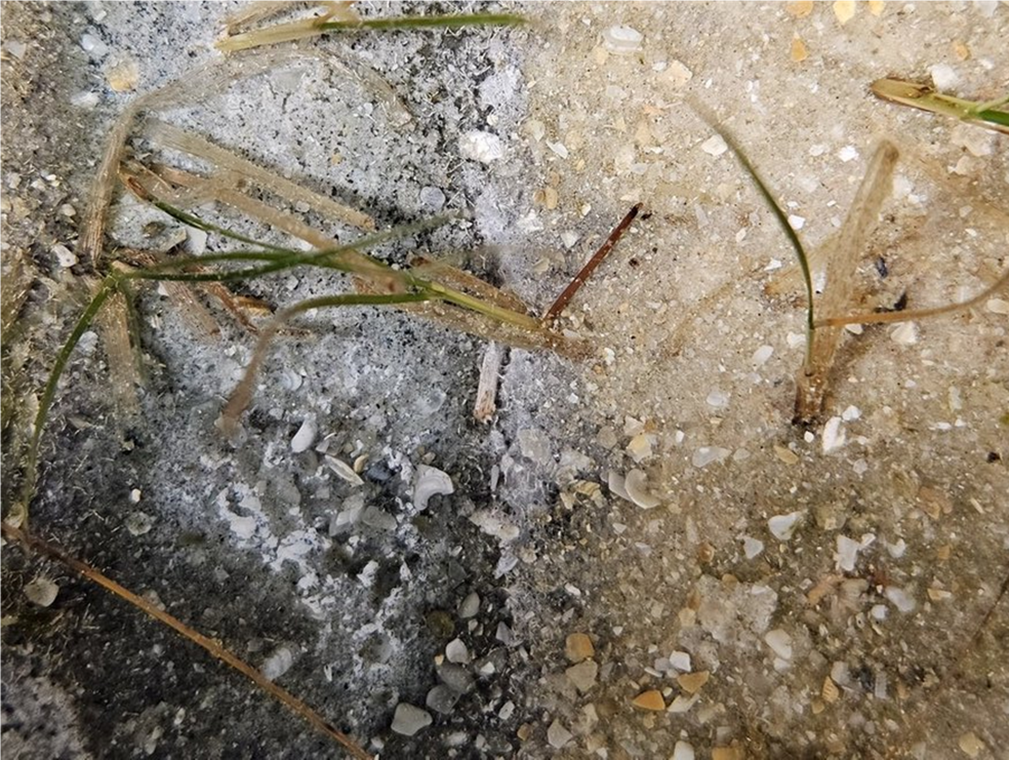
Hypoxic events caused by muck pulling oxygen out of the water are detrimental to the marine life Fox described as well as other bottom dwellers and bacteria found in healthy sediment that collectively keep that sediment oxygenated. By keeping it oxygenated, they create a barrier between the water and the damaging phosphorus that lies underneath it.
When those organisms die, the phosphorus is re-released into the water, starting a cycle that leads to the same type of algal blooms that contribute to hypoxia in the first place.
Fox’s paper is the first to determine that this process, known as internal nutrient loading, is happening in the estuary. It shows that nutrients such as phosphorous that have already been processed out of the system are being re-introduced to the water because of the hypoxia now detected at the sediment layer.
The focus of Fox’s future research will be on quantifying the effects of hypoxia in the Indian River Lagoon and its tributaries.
“We have some new mechanisms that we’re identifying for shallow, well-mixed, short-duration hypoxia that can help us better understand just how many nutrients come from hypoxic zones. And when we really understand the problem, then we can start to find solutions for this internal loading,” Fox said.