By Andrea Gajic
It is often said that a journey of a thousand miles begins with a single step. For Shannon Barry ’25 Ph.D., that journey began not with a step, but with a single fin.
Specifically, the fin of a fictional, animated shark. Her passion for marine biology and shark conservation was sparked by a scene in the Pixar movie “Finding Nemo.”
As Barry recalls, “There’s a particular scene where we get an overhead shot of Bruce, the great white, swimming, and I was just so mesmerized by how graceful and beautiful the movement was.”
This moment, she explains, ignited a lifelong fascination that led her to pursue a career studying the magnificent creatures.
The Path to a Purpose
While her initial interest was sparked by a love for animals and wildlife, Barry’s focus on conservation and genetics evolved during her academic career. She realized that her research could be a powerful tool for addressing pressing environmental challenges.
Her time at Florida Tech has helped her understand that making a difference isn’t always about grand gestures.
“The biggest perspective shift was realizing that making a difference isn’t always a big, giant action,” she says. “It can be as small as getting a student interested in science.”
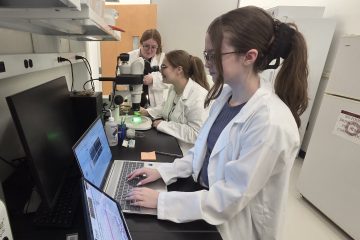
This perspective has guided her as she balances the rigorous demands of her Ph.D. program with fieldwork and public outreach.
“It really comes down to prioritizing what needs the most attention at that particular moment,” she says.
This balance allows Barry to dedicate time to both her research and her public education efforts.
Genetics and Global Change
Barry’s work has extended beyond the lab and into the public eye through her appearances on National Geographic’s SharkFest series. These TV programs, including the “World’s Biggest Bull Shark?” special and Investigation Shark Attack’s “Gulf Trouble” episode, have allowed her to communicate the importance of her research to a wider audience.
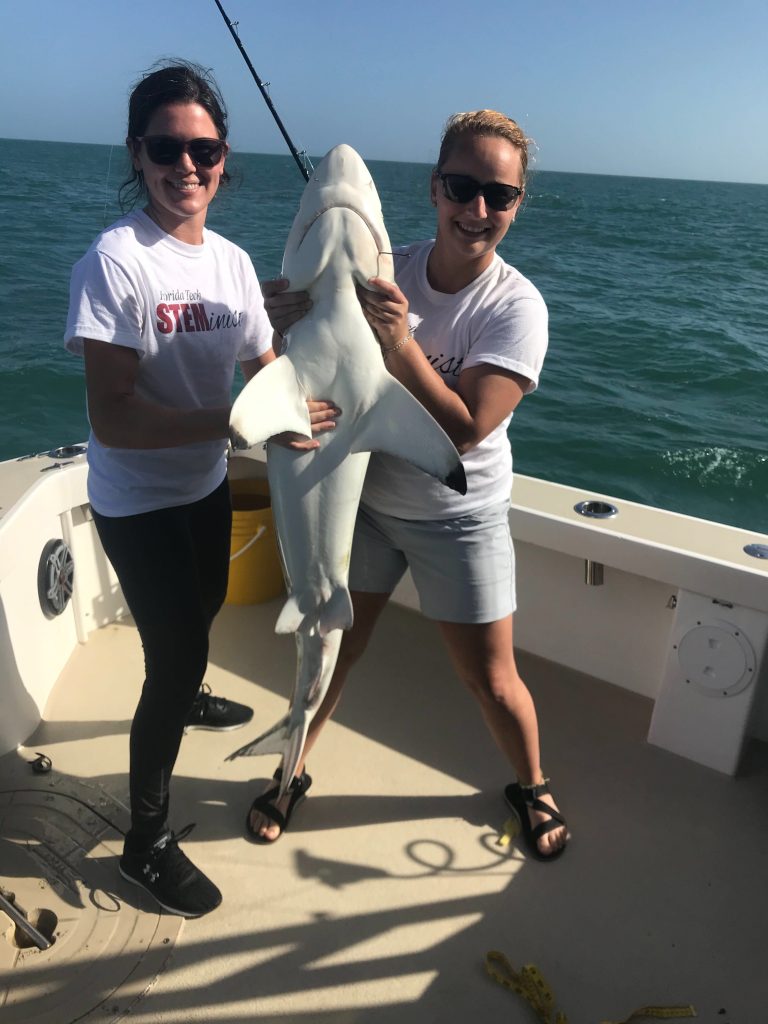
As a geneticist, she’s excited to show people how her field can be used to answer important questions about sharks.
“It’s great to be able to talk about how we use genetics as a tool to understand shark behavior, movement and climate responses, because not a lot of people realize that genetics can answer questions,” she says.
Her research is particularly focused on how sharks are responding to climate change. She hopes her work will inspire others to continue studying these issues and will inform conservation efforts, especially in protecting nursery habitats.
“Without those protections in place, juvenile sharks can be at risk of overfishing, which can be detrimental to the adult population over time,” she cautions.
By understanding how sharks are moving in response to a changing climate, Barry says, scientists and policymakers can better implement fishing regulations and manage these critical habitats.
A More Inclusive Future for Science
A central part of Barry’s mission is to inspire the next generation of scientists, particularly women and other underrepresented groups. She notes that, historically, women have been “absent or severely limited from scientific representation, especially in the shark sciences.”
However, she is optimistic about the future, citing the work of organizations like Minorities in Shark Sciences (MISS). She believes that a diverse group of scientists is essential for tackling global problems, such as climate change.
“Honestly, any time I’m able to catch a shark and see them in person is a great reminder of why I love doing what I do.”
Shannon barry, ’25 Ph.d
Barry’s advice to aspiring scientists who feel overwhelmed by the scale of global issues is simple: “Remember that there’s still hope, and by working on the issues, you’re already making a difference.”
She finds her own motivation in the simple yet profound moments of her work.
“Honestly, any time I’m able to catch a shark and see them in person is a great reminder of why I love doing what I do,” she says. “They’re such beautiful animals. So, the opportunity to see them up close is really amazing.”
This sense of awe, combined with the satisfaction of piecing together a scientific puzzle, fuels her dedication to her field.
Looking ahead, Barry hopes to continue her work on the impacts of climate change on marine life and to share her findings with the public. Whether through formal presentations or information opportunities, she wants to continue educating others and promoting positive change.
Her ultimate guiding belief is a powerful reminder for all of us: “Everything on this planet works together. Without healthy oceans, we don’t have healthy marine life, which can have catastrophic consequences on land.”

This piece was featured in the fall/winter 2025 edition of Reinvented Magazine.