Inside a sleek Dubai office building, in a room where she was facilitating complex efforts to reshape the very foundation of medical education in Egypt, Samantha Miles found her calling.
The Florida native worked closely with Egypt’s minister of higher education and other top leaders on the multifaceted initiative. She was well into what would become a significant and successful seven-year tenure at Knowledge E, a consultancy in the bustling emirate.
On this day, with four years of work behind her, one of Miles’ most powerful accomplishments was basically complete. It was a project that supported reforming the medical curriculum at universities across Egypt, updating an aging approach with a shift to more integrated teaching, a longer residency and other changes that would go on to produce scores of better-trained physicians.
It would have a major impact, deep and broad. And it would have that impact in large part because Miles saw the bigger picture. Stakeholders from government, academia and industry brought their own vision, but she had the ability, she realized, to guide the project—and its unique voices and interests—to a point where there was clarity and agreement and, most importantly, an effective solution.
“It was just so exciting to recognize that when you have this strategic approach, when you are zoomed out and can look at the different pieces in the puzzle, it actually can really make lasting change,” Miles says. “I like being in those rooms where there are lots of big ideas with people who have the intention and the ability to realize change and to get things done.
“The one word that I would hone it down to is ‘impact,’” she continues. “That’s what I wanted to do—meaningful work that had an impact in the real world.”
What she did not know at the time was that the very skills and strengths she was sharpening in Dubai would end up leading her back to the Sunshine State and a job that would be her biggest challenge yet.
“The one word that I would hone it down to is ‘impact,’” she continues. “That’s what I wanted to do—meaningful work that had an impact in the real world.”
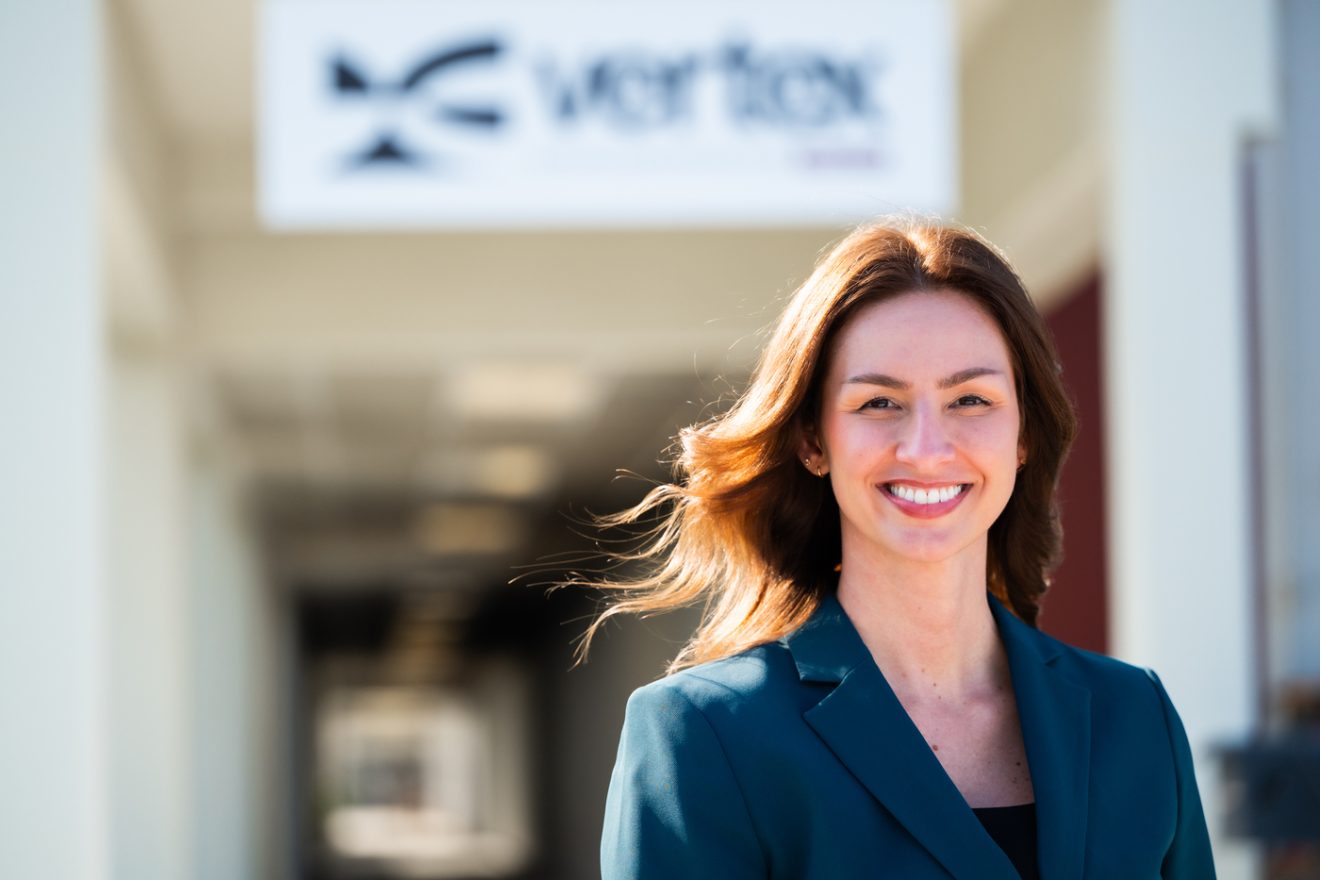
Samantha Miles
Growing up Adaptable
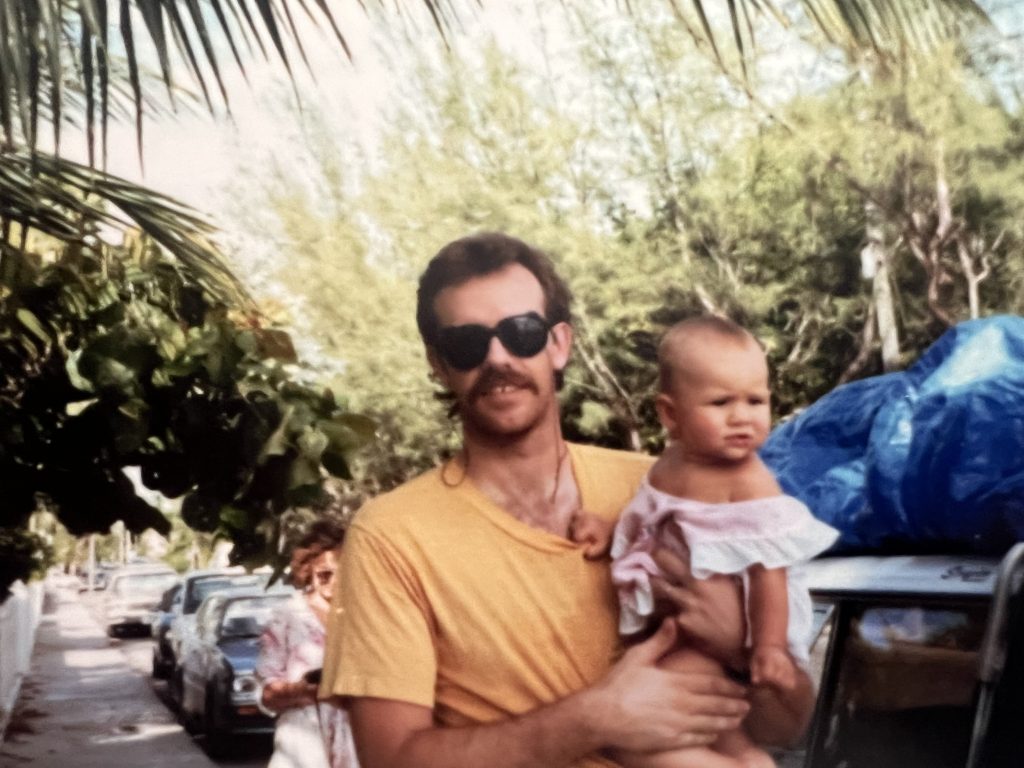
It was 1988 in Palm Bay and Roger Baltz, a farm-born Arkansas native, was working as a recreation supervisor for Brevard County’s largest city. More importantly, he was also, for the first time, a father.
At Holmes Regional Medical Center in Melbourne that January, Roger and Jane Baltz, a voluble New Zealand native Roger had met and fell in love with during overseas travel years earlier, welcomed their daughter, Samantha.
They would later welcome a second daughter, Rachel.
“I adored her from the moment she was born,” Miles says of her little sister.
At the time a family of three, they were sharing a condominium with Roger’s brother, Ken Baltz ‘87, in Melbourne Beach. (Ken Baltz had recently earned his bachelor’s degree in marine biology from a school not far from Holmes Regional called Florida Institute of Technology.)
With his young family to support, Roger knew an advanced degree would help him land more lucrative jobs. So, he would go on to earn a master’s degree in public administration.
Roger was energized by new challenges, and the nature of public administration and his roles as a nonelected official allowed the family some mobility. So, from Florida they moved to Pahrump, Nevada, where Baltz served as town manager.
The family would return to Florida for a job in Crystal River and others in Martin and Charlotte counties, and over Miles’ youth would live in California, Arkansas and Wyoming, as well. Roger was comfortable with change and, in fact, embraced it over these itinerant years.
His daughter noticed.
“That experience was extremely formative for me in terms of being able to enjoy going to new places and make new friends and all that kind of stuff,” Miles says.
Miles found it was easier to merge into a new school when she arrived midyear because that made it clear she was the new kid.
“I could come in and get an introduction to my new classmates of, ‘Hey, here’s the new girl. Be nice to her.’”
Summer moves, she says, were more challenging.
If her father helped show her the value of adaptability, having a mom from New Zealand helped expose Miles to her first international travel. The family would visit Jane’s extended family every three or four years.
Another gift from her mom is instantly evident to anyone who interacts with Miles: a cheerful and disarming friendliness.
“My dad is a southern gentleman with a slow drawl—thoughtful, steady and always put together. He’s calm and composed,” Miles says. “My mom is a vivacious Kiwi from New Zealand who talks a million miles an hour—fun-loving, cheerful and full of energy.”
Just as Miles drew life skills from her multiple relocations during childhood, the countervailing traits in her parents would coalesce in her and become both foundation and fuel for the international achievements that were on the horizon.
College and Chris
Leaning toward a career in education, with goals to earn a Ph.D. and, ultimately, land a job as a university president, Miles began her own higher education with a bachelor’s degree in elementary education from the University of Central Florida (UCF).
But well before she crossed the stage to collect her diploma, there was another major moment in her life. It began with an encounter at UCF with an engineering major and seventh-generation Floridian named Chris Miles. It ended with their marriage.
Samantha and Chris Miles will mark their 16th anniversary this year.
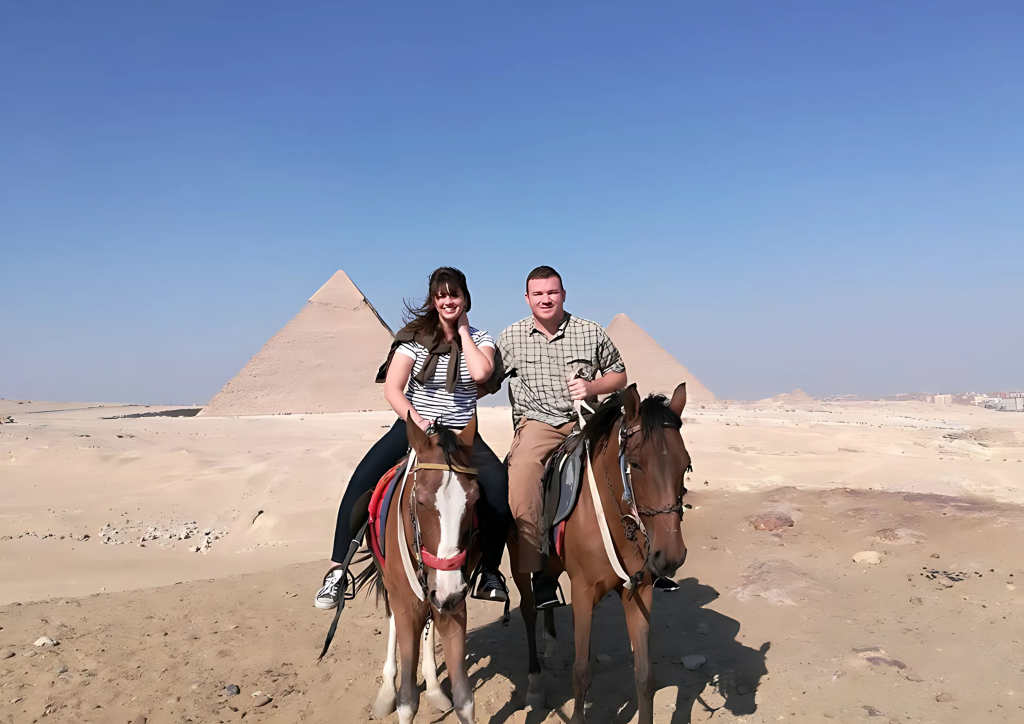
After UCF, she matriculated to Florida Atlantic University, earning a master’s degree in higher education leadership.
During this time, Miles worked for about a year at the Charlotte County YMCA as a site leader and later served as a graduate assistant, challenge course facilitator and hall coordinator at Florida Atlantic.
Looking toward the future, slightly unsettled, Samantha and Chris had the talk: Time to settle down and have kids? Or maybe consider living overseas for a bit? With her mom being a New Zealand native, Miles had a right to work both there and in its sister country, Australia.
“It felt like my dreams weren’t happening,” she says.
So, they decided to lean into their wanderlust. Miles began applying for jobs.
The University of Southern Queensland in Australia’s northeast offered her the student experience coordinator job. And the school agreed to cover the cost of both Miles’ and her husband’s flights.
“We thought, ‘Let’s go.’ So, we went over with two suitcases and about $500,” Miles says.
She started in January 2012 and would not live on U.S. soil for the next decade.
Queensland to Dubai

Miles served as student experience coordinator at the university, which is based in the capital city of Brisbane. In essence, she oversaw any activity outside of the classroom. She introduced some elements of U.S. universities, such as orientation leaders and student employee programs, and excelled at her job.
She was in her own classroom of sorts: the country of Australia. Her first extended time living and working abroad, she was fortunate that many core customs were like U.S. practices.
However, there was one very American habit that collided with Australia’s more balanced lifestyles.
Orientation was planned to happen just one week after Miles was hired, and little had been done to prepare. Given that, the campus director told her they would just not have orientation. But Miles disagreed and proceeded to work long days (and nights) that week trying to pull it off.
Four days into the week, the campus director stopped by and said security had told him she was working until midnight every night. Miles responded that those hours were needed to produce an orientation.
“And he said, ‘I just want you to know, I’m going to let you do this for orientation. But if you do this in the future, I am going to fire you because we have work-life balance here, and your workday ends at 5.’
“It was a revelation,” she says.
Miles remained at the Queensland university for nearly two years, departing in December 2014. Her next job was also in education, but the location was about 6,800 miles northwest of Brisbane.
The SP Jain School of Global Management opened its Dubai campus in 2004, drawn to the international mix of the city with its denizens from 200 countries speaking over 140 languages.
It was a relatively small campus compared with the school’s other locations in Sydney, Singapore and Mumbai, but still bustling. Miles, on the cusp of turning 30, came on as director of global learning and student life. Over the next year, she led the experiential education program across all four campuses, developed initiatives in areas ranging from cultural awareness to social engagement, and was an active member of the university’s leadership committee. She even designed and taught a course for undergraduates on global leadership.
Not seeking to shift away from traditional academia, Miles was intrigued nonetheless when she spotted a LinkedIn listing seeking to fill a position described as “head of learning.” It was at a Dubai firm she was unfamiliar with called Knowledge E. The job looked interesting, so she applied.
After an extremely positive interview, Miles was offered the job.
“So, I joined the company, and that really changed everything for me,” she says.
For the next seven or so years, Miles took on projects of complexity and significance in Dubai, from the medical school reform in Egypt to initiatives introducing gene sequencing there and establishing a proper research ecosystem. She worked with the UK, the Netherlands and other partner countries.
“The way I like to describe the Dubai professional landscape is that it’s like dog years for your career. If you’re hardworking and you’re smart, you will get terrific opportunities there,” Miles says. “The fact that I was 30 and sitting at the table with the minister of higher education for an entire country, I don’t think that would normally happen in the U.S.”
Language of Business
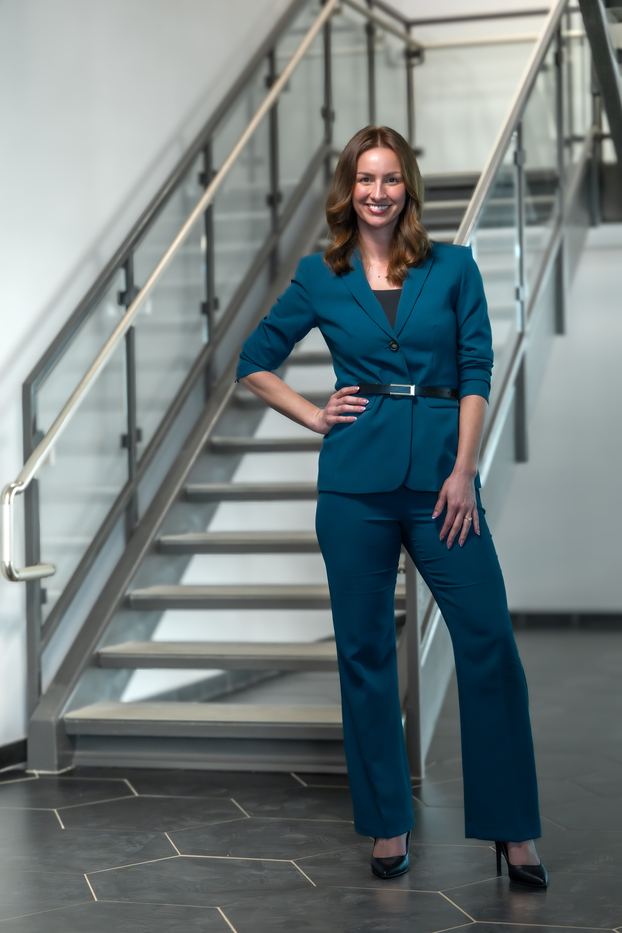
Samantha and Chris returned to Punta Gorda, Florida, in February 2022. She continued to offer remote consulting for Knowledge E while keeping an eye out for new challenges.
There was one in early 2024: Florida Institute of Technology was seeking an executive director for its new innovation center, then called the Center for Advanced Manufacturing and Innovative Design (CAMID).
“So, when I saw this one, I thought, ‘I know that I don’t have the technical expertise in advanced manufacturing, I don’t know how to use that equipment, but I do know how to strategically bring people together and make big plans and actually get my hands dirty to make things happen.’ That was exactly what I was doing overseas.”
The position had a lot going for it, she added: its location on the Space Coast, an area with the natural beauty and amenities of a small seaside town but the advanced industry of a place far larger; the connection she felt with Florida Tech and its values; and how the job and her skill set fit like puzzle pieces.
On Oct. 3, 2024, Florida Tech President John Nicklow sent a note to campus. He said CAMID was undergoing an exciting evolution into a powerful community resource, and Miles was the ideal pilot for the journey.
“She operates with grand vision but still manages the details; she realizes the value and impact of the nexus between education and industry; and she has a relentless approach and community-focused outlook that will ensure success while empowering our critical stakeholders,” he said.
So, Miles was back in Brevard County, the place she was born, the area that employed her father nearly four decades earlier and home to the university from which her uncle had graduated. But the job is not about nostalgia.
“I know that I don’t have the technical expertise in advanced manufacturing, I don’t know how to use that equipment, but I do know how to strategically bring people together and make big plans and actually get my hands dirty to make things happen.”
Samantha Miles
It is, she says, about using what she learned over the last 10 eventful years to propel this nascent entity, now called Vertex, forward, to guide it from fuzzy infancy toward an essential role as provider of guidance, capability and innovation.
“I think that international experience—juggling multiple projects at the same time and dealing with everybody from the driver who’s going to pick people up at the airport to the education minister for an entire country, being collegial and able to effectively communicate and be collegial with all of those different folks—those are all skills that will serve me in this role.”
Vertex, Miles says, is a tangle of amazing potential. While she says it will be her biggest challenge yet to straighten it all out, doing so will forever change our community.
“We have the opportunity to do something different and truly special here. Let’s use Vertex as the powerhouse that it can be,” she says. “The fact that we have this facility and technology combined with Florida Tech’s history of academic excellence—I think the missing piece is being able to speak the language of businesses and being able to operate at the pace of business. Vertex will bring us those capabilities and more.”