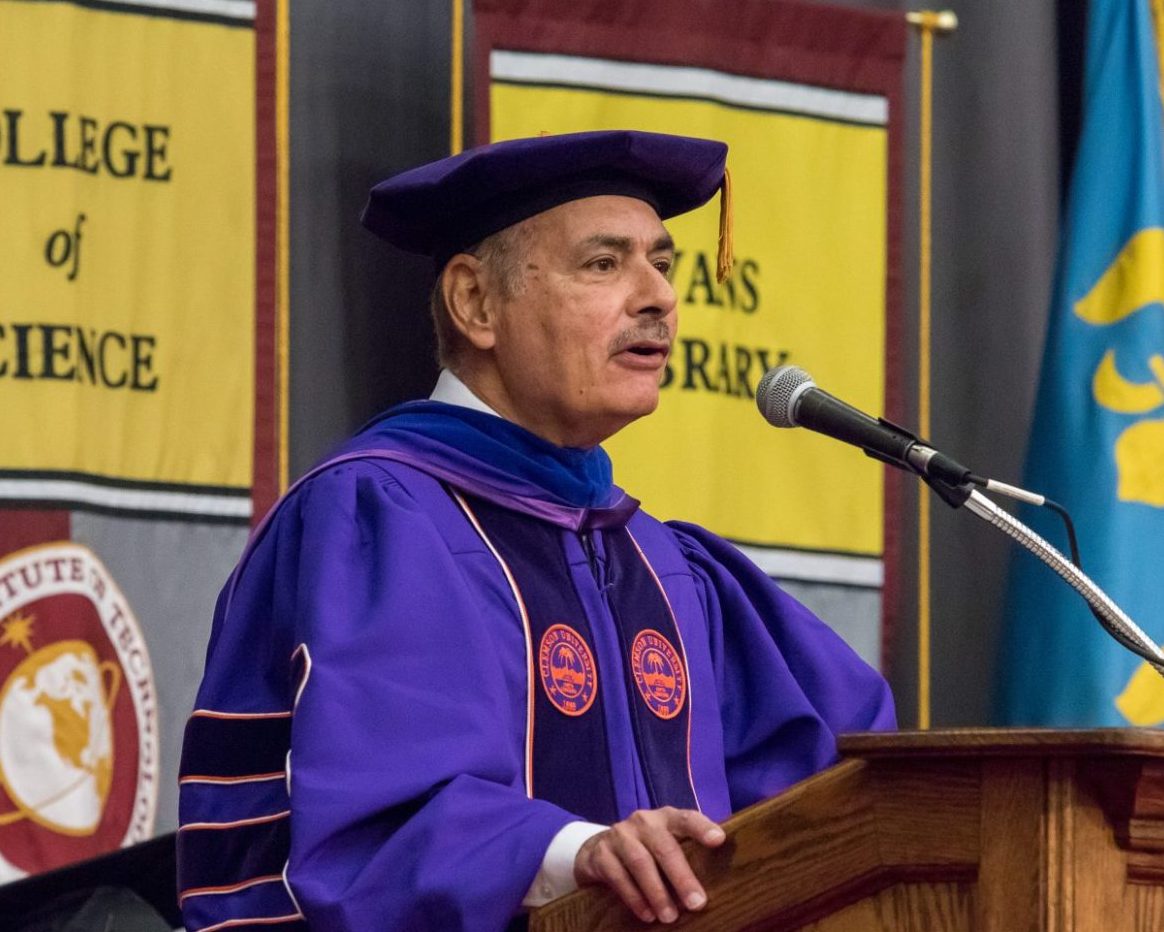
The first master’s student to graduate in civil engineering. The first research grant for civil engineering. The first doctoral program in water resources engineering and the first graduate from that program. The first published conference and peer-reviewed papers in civil engineering.
For these myriad firsts, there was a singular force behind them: Ashok Pandit.
For 42 years the soft-spoken civil engineer worked at Florida Tech. He was the fourth faculty member hired into the civil engineering program by then-department head Edward Kalajian, whom he would later succeed.
Pandit retired on June 30.
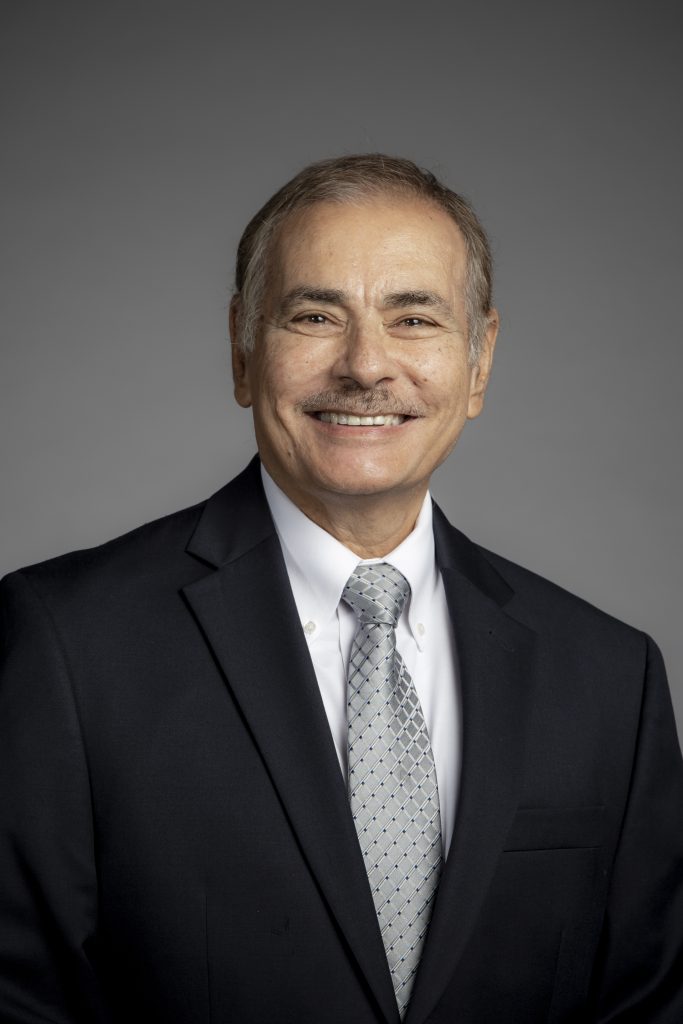
He said he never envisioned becoming head of the mechanical and civil engineering department. It happened in 2018 and he remained in that role until his retirement.
“The opportunity to lead and develop these programs and faculty has been extremely rewarding as I had the chance to work with many excellent faculty members,” Pandit said.
Pandit’s educational journey began with a bachelor’s degree in civil engineering from the Indian Institute of Technology in Kanpur, India in 1973. He then pursued a master’s degree in water resources engineering from Clemson University in 1976 and would go on to earn his Ph.D. from Clemson in 1982.
In September of that year he arrived at Florida Tech. “The situation in civil engineering (at Florida Tech) at that time really intrigued me,” Pandit said, noting that he was just the fourth faculty member in the civil engineering program when he was hired.
At Kalajian’s request, Pandit launched the university’s water resources program and taught many of its courses – six undergraduate courses in his first year, in fact. He went on to develop multiple undergraduate and graduate courses for the program, including groundwater hydrology and contaminant transport and numerical modeling of groundwater and urban hydrology.
In 1997, there were two developments of note involving Pandit: He was named a full professor of civil engineering, and in the first of what would become a series of key administrative roles in the civil engineering program, he agreed to serve as program chair.
In 2000, he became just the second person to serve as head of the civil engineering department. But there was one more major move coming.
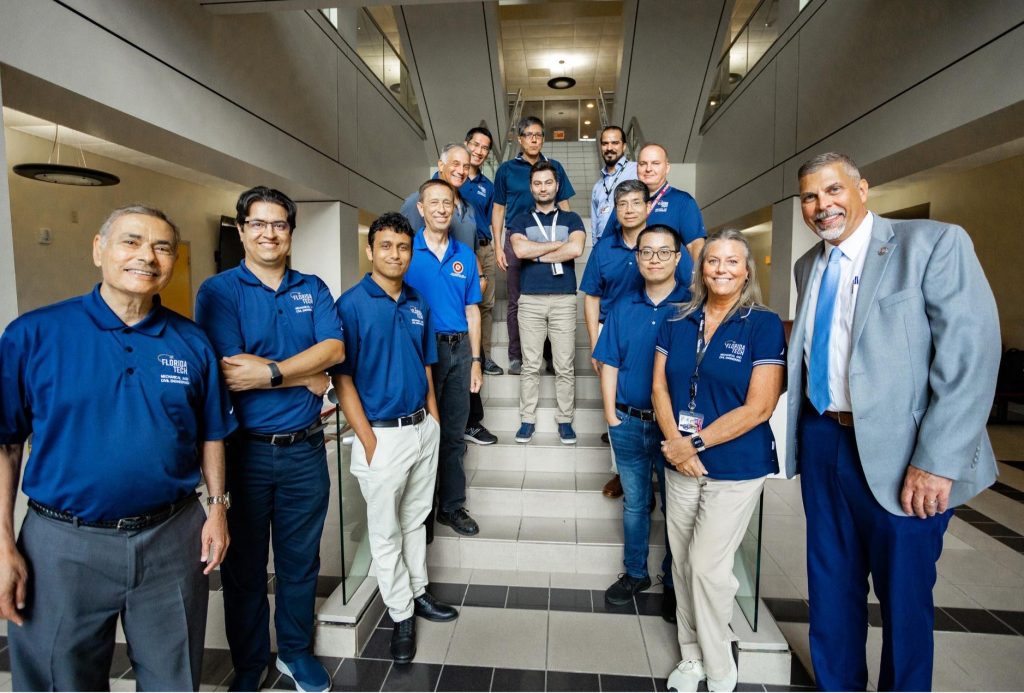
“In 2018, something happened that I had never envisioned: becoming the head of the Department of Mechanical and Civil Engineering,” Pandit said, adding that the department consisted of four programs – Mechanical Engineering, Civil Engineering, Construction Management and Engineering Management.
Pandit said highlights of his four-plus decades at Florida Tech include becoming a Fellow of the American Society of Civil Engineers (ASCE) and hiring faculty members in mechanical engineering (nine), civil engineering (two), construction management (two) and engineering management (one) in the last six years.
“That has truly been a highlight as I feel that all four programs have very high- quality faculty members and are in a great position to forge ahead,” he said.
Among his research highlights was obtaining a $620,000 award from the National Science Foundation to help make a Florida Tech education possible for students from community and state colleges.
“Twenty-five students were able to attend and graduate from Florida Tech in civil engineering, chemical engineering and ocean engineering thanks to this award,” he said.
Pandit helped created six endowments over the years and established – and for 10 years organized – Florida Tech’s engineering summer camp.
“My vision was to excel in the three areas of research, teaching and service,” Pandit said. “I believe and I have been fairly successful in all three areas.”
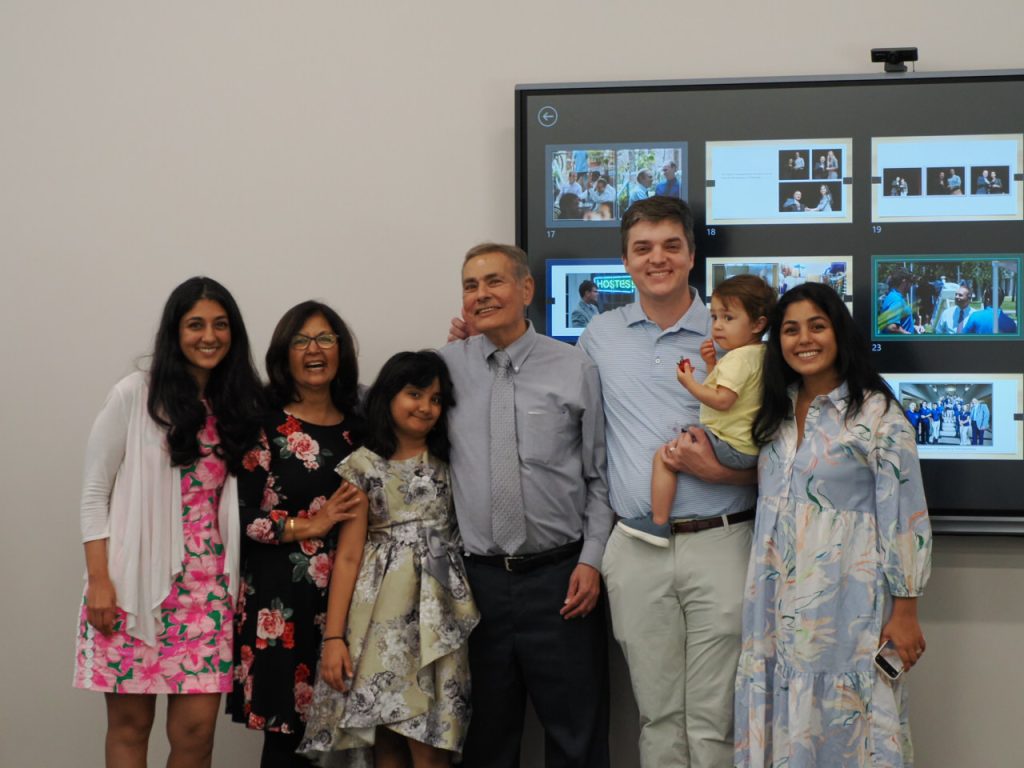
In retirement, the now Professor Emeritus is eager to spend time with his family, including two grandchildren and a third on the way.
“As we bid farewell to Dr. Pandit, we extend our deepest gratitude for his unwavering dedication, leadership, and impact on countless students and colleagues,” his department colleagues said in a LinkedIn post. “His legacy will continue to inspire future generations of engineers.”