“Who is your favorite Harry Potter character?” is not a question listed in any of the assessments Paige Sciera ’24 M.S. was trained to administer during a criminal forensic psychology evaluation.
It did, however, light up the defendant’s face and coax his guard down enough to participate in her assessment, which resulted in a clinical diagnosis that connected him to the resources he needed and, ultimately, changed his life.

A fourth-year clinical psychology Psy.D. student, Sciera is well-versed in the proper procedures and protocols necessary to conduct a thorough and accurate evaluation. She also knows that many of the most illuminating, impactful findings don’t come from asking the right questions—or even eliciting the right answers.
They are in the nuance: observing behavior, noticing small details—like a police report reference to a Harry Potter fixation—and knowing when to pivot with patience and kindness. In this line of work, actions—a glance, a breath, a blink—truly speak louder than words.
That insight, she says, comes from School of Psychology head Julie Costopoulos and the firsthand, real-world experience she gained as a member of Florida Tech’s Court Assessment Team (CAT).
Where Observation Meets Opportunity
The Court Assessment Team is a practicum group of clinical psychology Psy.D. students who evaluate Brevard County criminal defendants for forensic mental health issues.
Crafted and directly supervised by Costopoulos, the team prepares for and conducts the evaluations, then co-authors the final reports to the court.
“The purpose of a competency evaluation is to protect a defendant’s rights, so they aren’t proceeding to trial when they are not mentally present or held responsible for behavior that was actually the product of mental illness,” Costopoulos says. “It’s actually a very positive, protective purpose.”
Costopoulos created CAT in 2020, when the Brevard County Jail practicum site shut down due to the COVID-19 pandemic—a move that posed two problems: The existing shortage of mental health professionals swelled to new levels, and doctoral students could no longer gain the practical experience required for applying to internship programs, the typical next step.
CAT alleviated both.
While the need for more local mental health professionals remains, Costopoulos and her team have lightened the workload. In its six years, the team has served roughly 100 defendants in the Brevard County court system who otherwise could have been lost in the backlog.
But the team’s stellar reputation in the community comes less from quantity than quality.
“In my opinion, defendants get a more thorough evaluation from us because we can afford to take our time,” Costopoulos says. “Three hours of testing plus 10 hours of writing—that’s a lot of work. But we choose to do it because it’s beneficial to the case, and it’s beneficial to the students doing the work.”
Proof in Practice
Each semester, four or five students enroll in the CAT practicum, typically in their third or fourth year, once they have completed prerequisites, such as Costopoulos’ Forensic Assessment course.
When a judge or an attorney appoints Costopoulos to a case, she and two CAT students begin poring over existing records—police reports, prior arrest records, Department of Children and Families reports and more—to determine what kinds of mental health issues they may be dealing with and which tests they’ll likely need to administer.
Then, they meet the defendant for evaluation, often at the jail.
“For many students, it’s their first time in a jail, and it’s really neat to nurture them through being safe, being cautious and being a comfortable professional,” Costopoulos says. “To be effective, they need to be all the things psychologists are: nurturing, kind, supportive and clear. Putting those together can be a challenging balance for new professionals.”
“The purpose of a competency evaluation is to protect a defendant’s rights, so they aren’t proceeding to trial when they are not mentally present or held responsible for behavior that was actually the product of mental illness. It’s actually a very positive, protective purpose.”
Julie Costopoulos
During the evaluation, the three take turns conducting a mix of clinical interviews and diagnostic, intelligence and forensic tests involving verbal, written and motor-related exercises. The assessments help determine factors such as competency, sanity and intentional symptom fabrication or exaggeration, called “malingering.”
As the semester progresses, students take on increasing responsibilities. They learn to think on their feet, communicate nonverbally and redirect when necessary—lessons that words in a book or a classroom cannot proportionately communicate, Costopoulos says.
The pace can be swift, and often, defendants are not particularly pleased to participate. Whether by choice or due to severe mental illness, at times, they simply don’t.
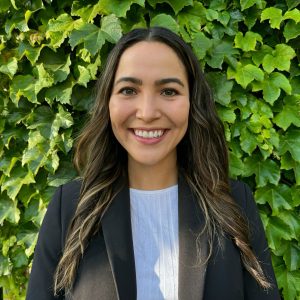
“One thing that I was surprised by was how much information you can get from just observing,” says Hayley Rodriguez ’19 M.S. ’22 Psy.D., one of CAT’s first two students who helped build the program. “I learned so much from just watching the scene and applying that into a court report.”
After concluding their assessments and completing corroborating interviews with victims, witnesses, caretakers, treating physicians, jail deputies and others, Costopoulos and the students divvy up sections and write the report, collectively diagnosing and rendering opinions.
Then, they all sign it.
“There aren’t a lot of other practicum sites or other universities that allow you to put your name on court reports as a student,” Sciera says. “Getting that kudos, that name credit, definitely drew me to Florida Tech over other programs.”
Experience That Speaks for Itself
Sciera isn’t the only one.
In fact, the Court Assessment Team, with its faculty-led, hands-on education, is frequently cited by prospective students as a main reason for their application and is consistently described in course evaluations as the single most important training experience during students’ time at Florida Tech.
“I don’t think I would have matched at the internship site that I did had I not had the Court Assessment Team experience,” Rodriguez says. “I had so many hours of testing, court report writing and direct interview experience—it was a huge advantage.”
Today, Rodriguez works for the state hospital system in California as a senior psychologist specialist, writing court reports for people who have been found incompetent to stand trial.
“The biggest lesson I learned from Court Assessment Team was how much of an impact the work we do has and how strong of a voice mental health professionals play in the legal setting,” she says.
Sciera recently matched for her internship with the Wisconsin Department of Corrections, where she’ll spend the next year before graduating from Florida Tech in May 2027.
“Court Assessment Team has helped with my professional, clinical and even personal development so much, and for several different reasons,” she says. “It’s definitely a multifaceted, fantastic opportunity.”
This piece was featured in the spring 2026 edition of Florida Tech Magazine.