Florida Tech is widely recognized for its international diversity and focus on preparing students for success in the global workforce.
Central to this commitment is the university’s Cultural Competency Certificate, an immersive experiential learning program that cultivates students’ awareness, knowledge, and understanding of world cultures, customs, and communities. Completion of the certificate results in an acknowledgement on the student’s transcript, making it a valuable credential. This achievement can be included in job applications, resumes, CVs, and graduate school applications.
Students in the program must satisfy a criterion by engaging in a range of activities, courses, workshops, and other integrative experiences that demonstrate the value of diverse experiences, voices, and perspectives. Experiences that count toward the certificate include studying abroad, participation in diversity clubs or organizations, attending cultural events, completing a qualifying academic course, and professional work such as an internship or practicum.
Launched in 2015 as part of Florida Tech’s Quality Enhancement Plan (QEP) — a requirement for accreditation by the Southern Association of Colleges and Schools Commission on Colleges (SACSCOC) — the program initially emphasized international cultural awareness. In 2020, the program was refocused on a broader spectrum of cultural understanding, reflecting the ongoing globalization of campuses, society, and the world.
To complete the program and obtain the certificate, students must earn eight non-credit points. All the criteria, except the First-Year Experience (FYE 1000), require the completion of reflection questions, which can be found in Engage. Engage is the engagement platform used by all Florida Tech students to manage their involvement in clubs, organizations, and unique opportunities like the Cultural Competency Certificate.

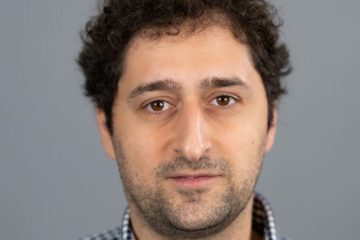
Florida Tech Ph.D. student Emily Happy ’23 graduated with a bachelor’s degree in applied mathematics and the Cultural Competency Certificate in May 2023. As an undergraduate, she also participated in Florida Tech’s Study Abroad program in Oxford, England, and earned a master’s degree in statistics with data science from the University of Edinburgh in 2024.
“The Cultural Competency Certificate enriched my undergraduate experience at Florida Tech by an extraordinary amount. My experiences studying abroad and taking classes forced me to get out of my comfort zone in amazing ways. It helped me to connect to many people and even changed my entire outlook on attending graduate programs,” Happy said.
In Spring 2022, for her Applied Discrete Mathematics course, Happy completed a project using counting formulas to determine there are 2.47 quadrillion ways to earn the certificate—through a combination of 71 qualifying courses, 30 diversity organizations, and 57 events per semester.
Her research also revealed that many students, by their junior year, have already met the requirements for the certificate without realizing it.
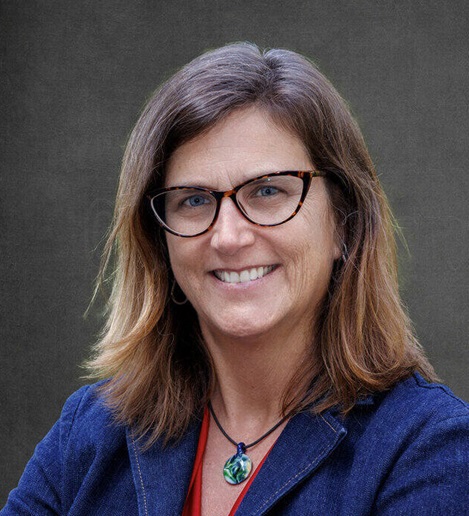
“The program itself is wonderful because it is co-curricular, and most of the things required for the certificate are things students are going to do anyway. It is just a matter of making them aware of the program and having them complete the reflection questions,” said Nancy Garmer, Associate Dean of Libraries, and former program coordinator of the Cultural Competency Certificate program.
Each of Florida Tech’s academic colleges offers at least four courses that emphasize cultural competency. Therefore, no matter what a student majors in, they can earn points toward the certificate while taking qualifying courses that relate to their academic pursuits.
Studying abroad is one of the most impactful ways for students to earn points. International students studying at Florida Tech automatically earn two points toward the certificate for attending school in the United States. Domestic students can choose to both earn course credits and certificate points through one of Florida Tech’s Study Abroad programs in places such as England, Puerto Rico, Spain, Taiwan, France, or China, just to name a few.
The capstone reflection is the final project that reflects on the student’s cultural experiences. Prior to presenting the project, students must have six points of qualifying criteria. The format of the capstone is flexible. According to Garmer, students have created websites, videos, podcasts, essays, video games, and more for their capstone projects.
“My favorite part of coordinating the program was seeing the capstone projects. The students study abroad, take classes, and then they have this capstone where they must synthesize all their experiences into one. It was phenomenal to see how they grew and what they learned,” Garmer said.
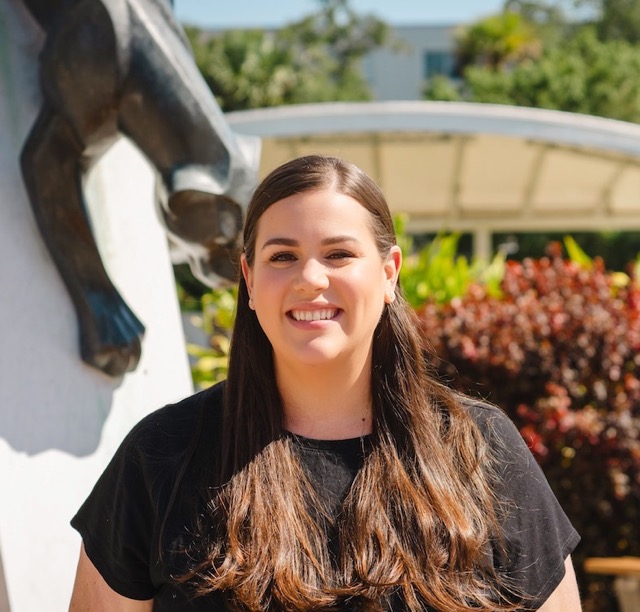
For the 2024-2025 school year, the Cultural Competency Certificate program will be overseen by the Office of Student Affairs. Dean of Student Affairs, Cat Nanney, is eager to utilize her office’s resources to enhance the cultural competency experience for all students.
“I am excited to grow the program and make students aware of the opportunities that are available,” Nanney said.
Nanney hopes that upon completion of the program, students will become great leaders that will thrive in a culturally diverse world.
“Yes, you are learning about different cultures, finding a sense of belonging, and feeling more comfortable and confident in the world around you, but this program is also about how to lead with respect,” Nanney said.
Looking ahead, there is optimism that the program will remain integral to the Florida Tech experience.
“I hope the program takes hold and becomes part of the culture of Florida Tech because of the immense value it brings to our students,” Garmer said. “Over the past decade, it has evolved significantly to become what it is today. My hope is that it will continue to adapt and grow, ensuring it meets the ever-changing needs of our students.”
For a closer look at the experiences and events within the Cultural Competency Certificate, students can follow the program on social media, where program highlights, student journeys, and upcoming opportunities are shared.