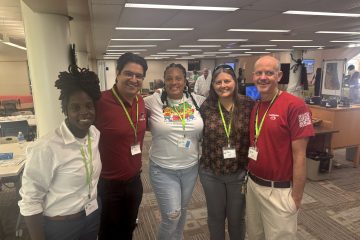
MELBOURNE, FLA. — Nearly 200 university researchers and representatives of the space industry gathered at Kennedy Space Center in April to launch the next phase of the Florida Space Research Consortium (FSRC), a statewide partnership designed to align the Sunshine State’s universities around space research, innovation and workforce development.
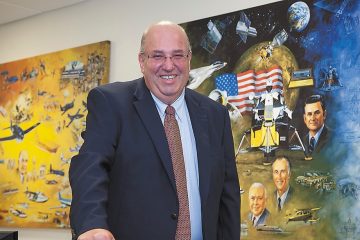
Florida Tech provost and space biologist John Z. Kiss, Ph.D., and Chief Research Officer Amy Adamson Ph.D., joined representatives from the seven additional partner institutions in the consortium — Embry‑Riddle Aeronautical University, Florida A&M University, Florida International University, Florida State University, the University of Central Florida, the University of Florida and the University of South Florida — to engage with NASA officials, space industry leaders and investors in a day-long discussion of how to strengthen Florida’s competitiveness in a rapidly expanding global space economy.

“Florida’s space sector — spanning civil, commercial and national security missions — has entered a period of rapid growth, creating new opportunities for collaboration among universities, industry and government agencies,” said Rob Long, president and CEO of Space Florida, the official aerospace economic development agency for the state.
Representatives from the member universities shared dozens of ways their faculty are advancing a wide range of space research that supports everything from exploration and discovery to practical technologies needed for future missions. Ongoing work across the consortium includes developing smarter spacecraft and satellites; improving propulsion, navigation and communications systems and designing new materials that can withstand the harsh conditions of space.
Researchers are also focused on the human side of spaceflight and the science that helps us better understand our universe and our planet. This includes studies of how people, plants and biological systems function in space and efforts to grow food in lunar and Martian conditions.
Florida Tech’s legacy of research and scholarship rooted in the nation’s space program underpins the university’s important work for the space research consortium and beyond, Kiss said.
“With decades of faculty, alumni and research contributions spanning Mercury through Artemis, Florida Tech uniquely integrates interdisciplinary research, workforce development and industry‑aligned education to accelerate innovation for NASA’s Moon‑to‑Mars mission and the growing space economy,” Kiss said.
At the gathering, Kiss and University of Florida research professor Anna-Lisa Paul presented on the merits of the consortium. Those include how it positions Florida as a national leader in space research and policy, how the work associated with the consortium will enhance student and faculty opportunities statewide, and the benefits it brings to workforce development for the space economy by aligning education, research and training with NASA’s needs.
Adamson offered a science overview of Florida Tech.
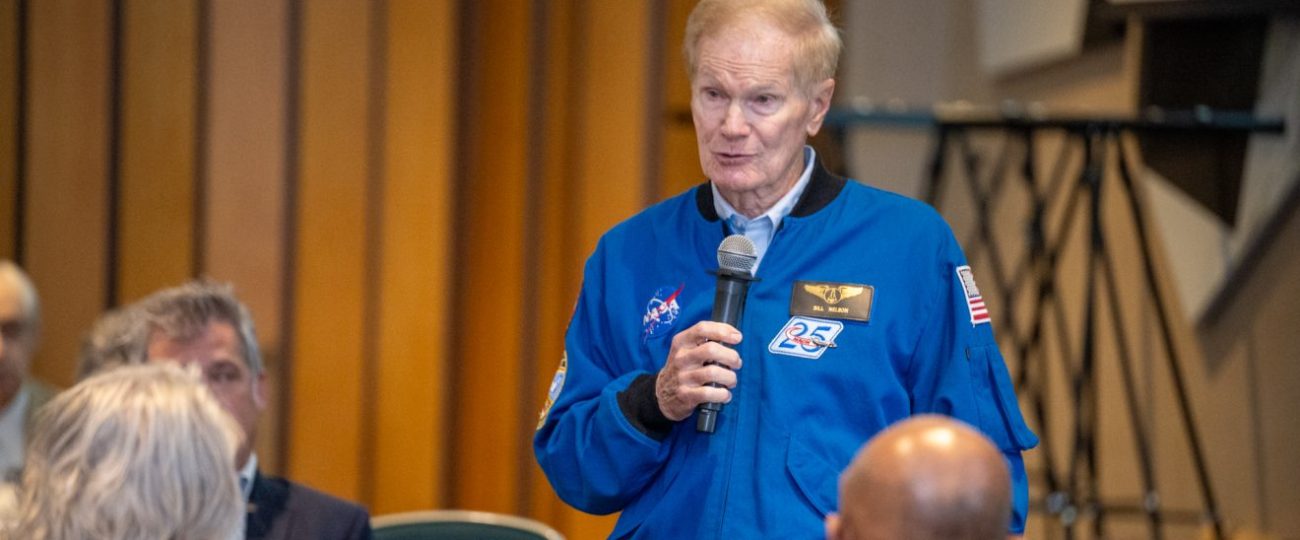
The eight universities in the consortium represent over 300,000 students and $3 billion in annual research activity. Former NASA Administrator and U.S. Senator Bill Nelson said harnessing that powerful collective is a long‑needed step for Florida.
“Space is the one subject that brings people together,” Nelson said. “It’s not partisan — it’s nonpartisan — and it’s a noble enterprise. What you are doing here today is enormously important for the future of this state.”