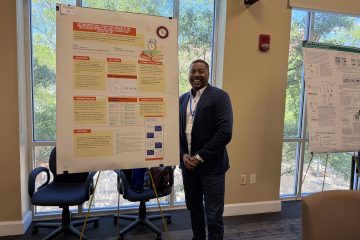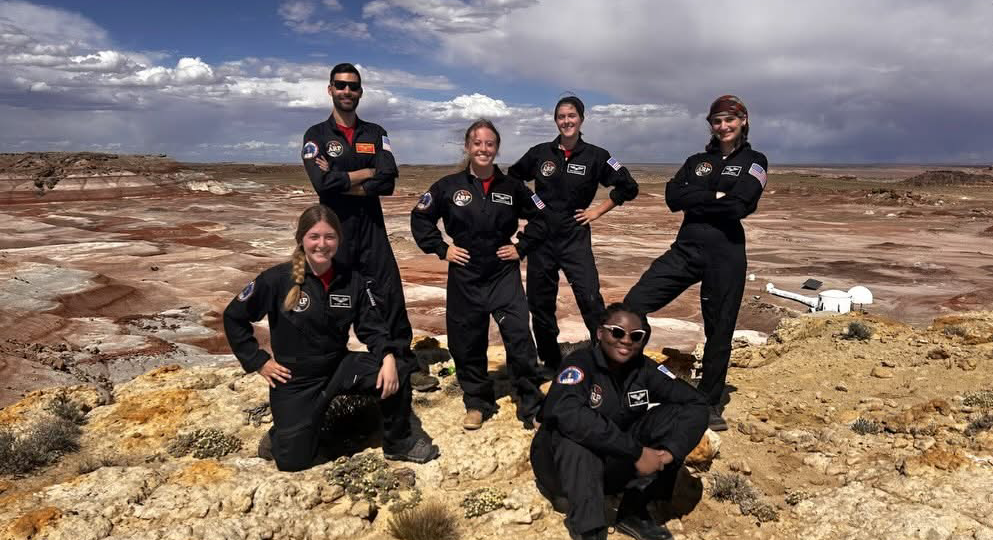
For five (Martian) days in the Utah desert, a team of Florida Tech students lived as if they were already on Mars.
Operating under full Mars analog protocols at the Mars Desert Research Station, the six-member crew conducted research, completed spacewalk-style extravehicular activities (EVAs) and managed delayed communications designed to simulate the realities of future human missions to the Red Planet.
Even more remarkable: The entire crew was made up of Florida Tech students.
The mission also served as the pilot mission for Florida Tech’s Analog Research Program (ARP), a new Student Life organization that provides a professional platform for student scholars with a passion for space-related research to conduct their work in high-fidelity analog environments.
“This mission proved that the university can effectively support student scholars in realistic testing environments, establishing a new and permanent avenue for future space research,” said Peyton Hay ’26, mission commander, ARP founder and then-senior electrical engineering major.
The crew was:
- Commander: Peyton Hay ’26
- GreenHab Officer: Anna Weatherwax
- Crew Scientists: McKenna Taylor and Allona Yehiav
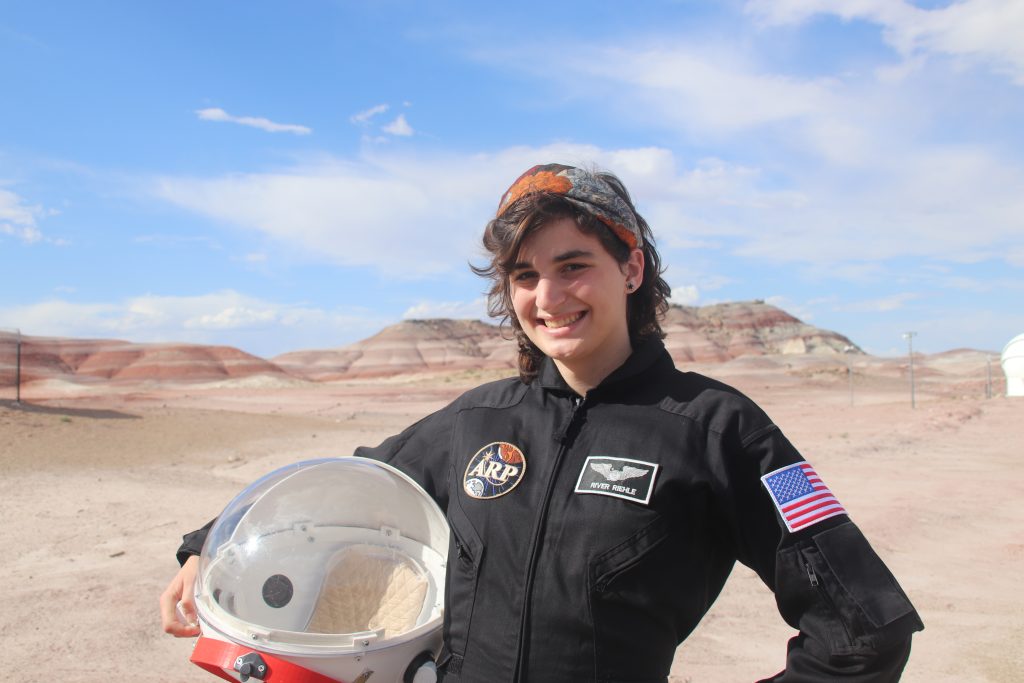
- Crew Engineer: River Riehle ’26
- Health and Safety Officer: Ann Alor
- Alternate/Ground Control: Sydney Deck
Together, the students carried out four research projects focused on plant biology and satellite communications for future Mars exploration. Over the course of the mission, they completed 11 EVAs while operating with a 15-minute communication delay meant to mirror conditions astronauts could experience on Mars.
“Leading this team in an isolated setting was a transformative lesson in accountability and clear communication,” Hay said. “The insights I gained from our crew and the obstacles we overcame together have made me a more capable leader for my future career.”
Several of the crew’s projects explored how plants and microbes might survive in Martian conditions.

Students collected soil samples near the research station to study plant growth-promoting bacteria and investigate whether microbes could adapt to lower-pressure environments, like Mars. The team also tested the growth of Brassica rapa plants and low-pressure-treated sugar snap pea seeds in simulated Martian regolith and local desert soils.
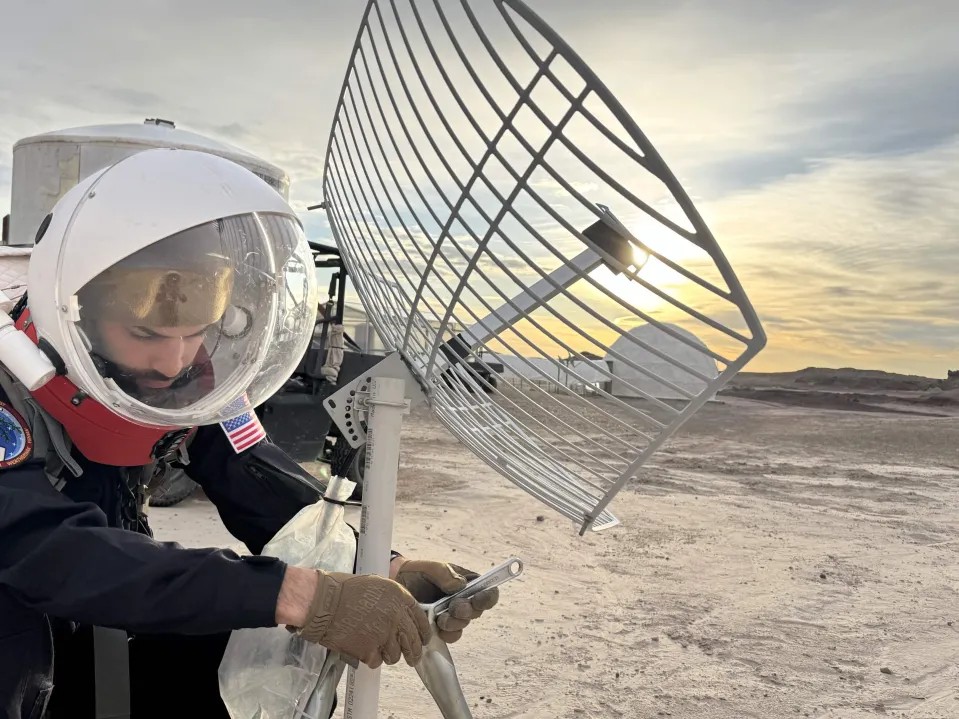
Another project focused on satellite communications. Riehle ’26 successfully downlinked and processed weather data from the GOES-19 satellite, creating graphics capable of tracking weather system evolution and helping predict daily conditions.
“I’m no meteorologist, but it’s safe to say that if I can do it, competent astronaut crews could use a system like this to get real-time updates on the weather outside their habitats,” Riehle said.
Deck, an alternate crew member who attended meetings and completed all training alongside the others but did not travel to Utah, created and administered a daily survey to gather data about the psychological effects of the time delay and isolation of the environment.
Beyond the research itself, students gained experience solving operational problems—from equipment issues to habitat maintenance—in real time while working closely as a crew under demanding conditions.
“MDRS was a fantastic opportunity to apply classroom knowledge and technical skills in an environment that is usually hypothetical,” Riehle said. “This allowed the crew to directly experience the reality of living and doing research on Mars, and we learned a lot about how those constraints impact everyday life.”
The mission closed out the Mars Desert Research Station’s 2025-2026 season and gave students an immersive introduction to the realities of human space exploration. Crew members said the experience strengthened both their scientific skills and their commitment to pursuing careers in spaceflight.
“For the duration of the five-sol mission, the Mars Desert Research Station was home to uproarious laughter and conversations rooted in inspiration,” crew members reflected in their final report. “Each crew member only grew more certain in their aspirations of becoming astronauts themselves.”
By the end of the mission, the students described themselves not just as teammates, but as “acquaintances-turned-family,” united by a shared goal of helping shape the future of human exploration beyond Earth.